

Grit with Joubin Mirzadegan · Nov 3, 2026 · 1h 6m · 57m saved
With Immad Akhund, Co-Founder and CEO of Mercury
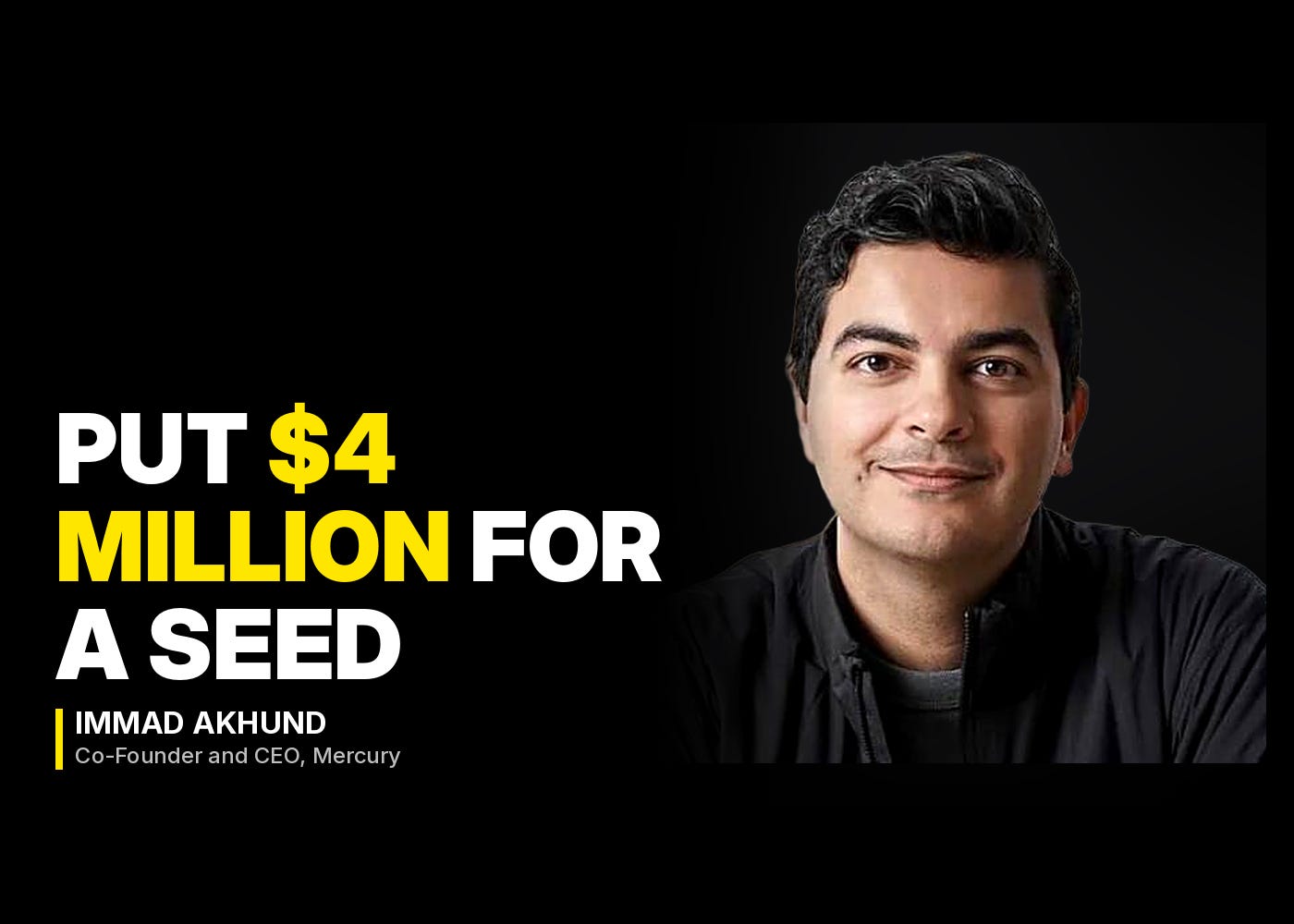
Photo via techcrunch.com
Mercury gave its new personal banking product $4 million and its own team, as if it were an outside startup, and promised $20 million more if it worked. Immad Akhund, co-founder and CEO of Mercury, told Joubin Mirzadegan, a partner at Kleiner Perkins, on Grit that the company funds its new bets this way so they do not raid the teams running the core business.
"We're willing to put $4 million for a seed funding for this new bet internally... if it proves that, then hopefully it becomes a series A bet and we'll give it $20 million." — Immad Akhund
Immad is on his fourth startup after 20 years as a founder. He moved from Pakistan to England at nine and from England to Silicon Valley at 23, and he says that path left him with no sense of entitlement. Mercury now has about 1,300 employees and has been profitable for four years.
The full interview is covered here so you can skip it. 66 minutes of audio, 9 minutes of reading.
Here are the 10 lessons that matter.
Key Takeaways
Grit means enjoying hard problems, not enduring them
Mercury funds new products like internal startups, with a seed round and a promised Series A
Every founder raises too much in a hot market, Immad says, and Mercury did at every round
It raised at a $1.6 billion valuation on $12 million of revenue in 2021
Headcount is a worse measure of a startup than revenue
Do not hire an executive before a function has about 30 people
A growing company drifts toward worse hires and worse service unless someone pushes back
1. Adversity Is Fun
Immad said grit is not about gritting your teeth through hardship. He compared it to sports, where a competitor wants a hard match rather than just putting up with losing.
Immad Akhund says he wants to be challenged, not spared
"Number one, I think adversity is fun... I don't want things to go wrong, but I want to be challenged. I want to do hard things." — Immad Akhund
Motivation matters as well. Founders driven by money give up sooner when things get hard than founders who think their work improves the world.
"If you're doing something because you think it'll be better for the world, I think that's like a motivation that can outlast. Whereas if the motivation is like, how do I make the most money, then when you hit a hard patch, it's hard to fight through it." — Immad Akhund
