

The Investor's Podcast · Oct 10, 2026 · 1h 31m · 77m saved
With Michael Moritz, former Chairman of Sequoia Capital
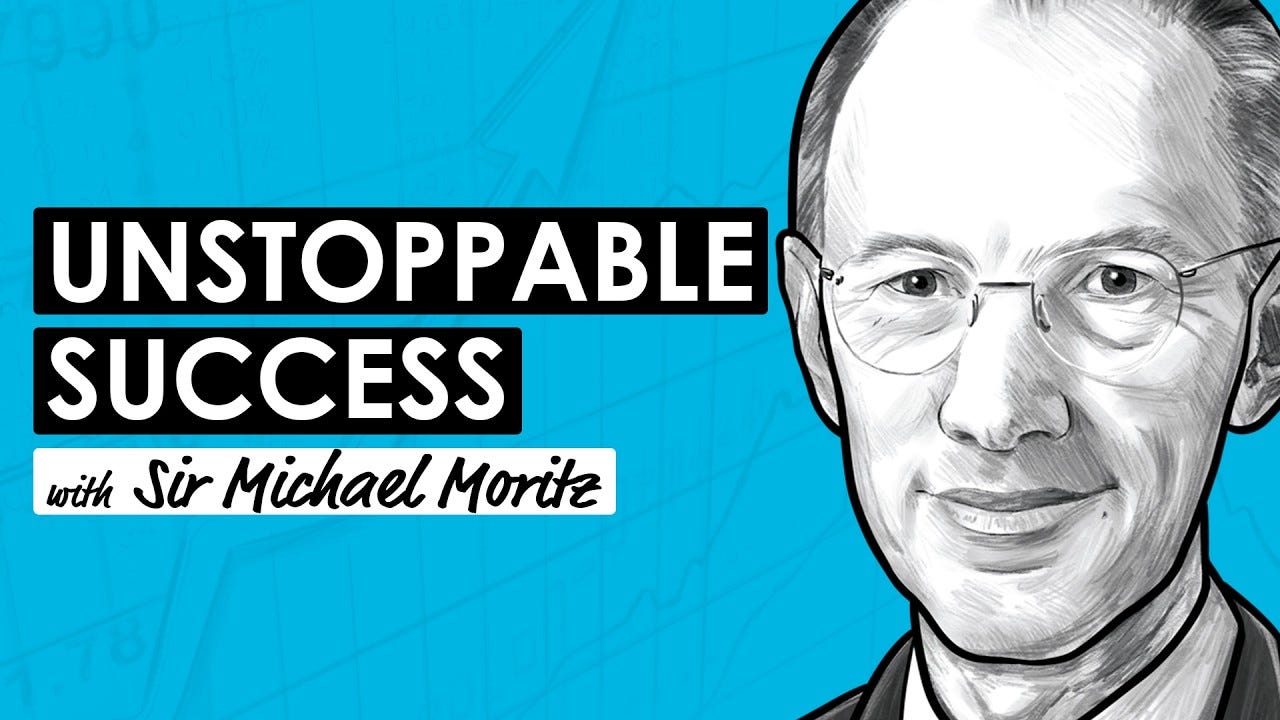
Charlie Munger once told the host that of Sequoia Capital's early partners, Michael Moritz did best. Munger's reason was temperament, not intellect: Moritz held on to everything.
Most investors sell when a stock reaches a record, a quarter disappoints or an executive leaves. Moritz said the urge to act is the problem.
"Most investors are incapable of doing nothing." — Michael Moritz
Michael Moritz, former chairman of Sequoia Capital, spent about 38 years at the firm and played an important role in its early investments in Google, Yahoo, PayPal, LinkedIn and Stripe, by the host's account. Before that he covered Apple and Microsoft in their early years as a Time magazine reporter. On The Investor's Podcast he discussed his new family memoir, "Ausländer," and what he learned about judging founders.
The full interview is covered here so you can skip it. 91 minutes of audio, 14 minutes of reading.
Here are the 11 lessons that matter.
Key Takeaways
Charlie Munger said Moritz beat his brighter Sequoia partners by holding on to his winners
Moritz said most investors cannot resist selling when a stock hits an all-time high
A well-positioned company that compounds for many years is the best thing an investor can own, Moritz said
Venture investors never get perfect information, and Moritz said Oxford essays and Time magazine taught him to decide anyway
He said investors trained as engineers find that harder
Great founders share the same traits: early obsession, insatiable curiosity, no distractions and a strong commercial sense
Bill Gates had the radio taken out of his car so nothing would pull his mind from Microsoft
Even deep diligence gets founders wrong, he said, and he keeps a Webvan cap as a reminder
Jensen Huang still runs Nvidia 34 years after Sequoia backed it, which Moritz said no one could have predicted
An early-stage investor has to let much younger founders teach him
Microsoft beat IBM because Gates had thought harder about PC software than IBM's senior people
Alex Ferguson's rule is to be respected rather than loved or feared
Every leader's job is to sell a future others cannot see, which Moritz said Elon Musk does at the largest scale
1. An Outsider From Cardiff
Moritz grew up in Cardiff, Wales, the son of two refugees from Nazi Germany. He said Wales then had between 450 and 600 Jewish families in a population of about 2.5 million to 3 million.
Each year's Cardiff phone book confirmed that his family was the only Moritz listed
"But every year that I remember, we were the only Moritz." — Michael Moritz
His father came to London from Munich in 1937 on a scholarship to St. Paul's School, speaking no English. He later told Moritz the happiest day of his life was winning a scholarship to Oxford, because without it he would have been sent back to Germany. A stranger his uncle and grandfather met by chance on London's Bond Street paid for his uncle's schooling.
His mother arrived in 1939 on the Kindertransport, which Moritz said carried about 10,000 Jewish children out of Nazi-controlled territory. He credited its organizer, Nicholas Winton, who was not Jewish.
He said his family's survival depended on people who stepped forward to help refugees
"I feel incredibly indebted to them." — Michael Moritz
He began the memoir after his mother died shortly before the pandemic and his sister sent him four cartons of family papers. His parents never sought help for depression or anxiety, he said, and their fear that the horror could happen again colored their whole lives.
