

Semafor · Nov 16, 2026
With Alejandro Reynal, President and CEO of Four Seasons Hotels and Resorts
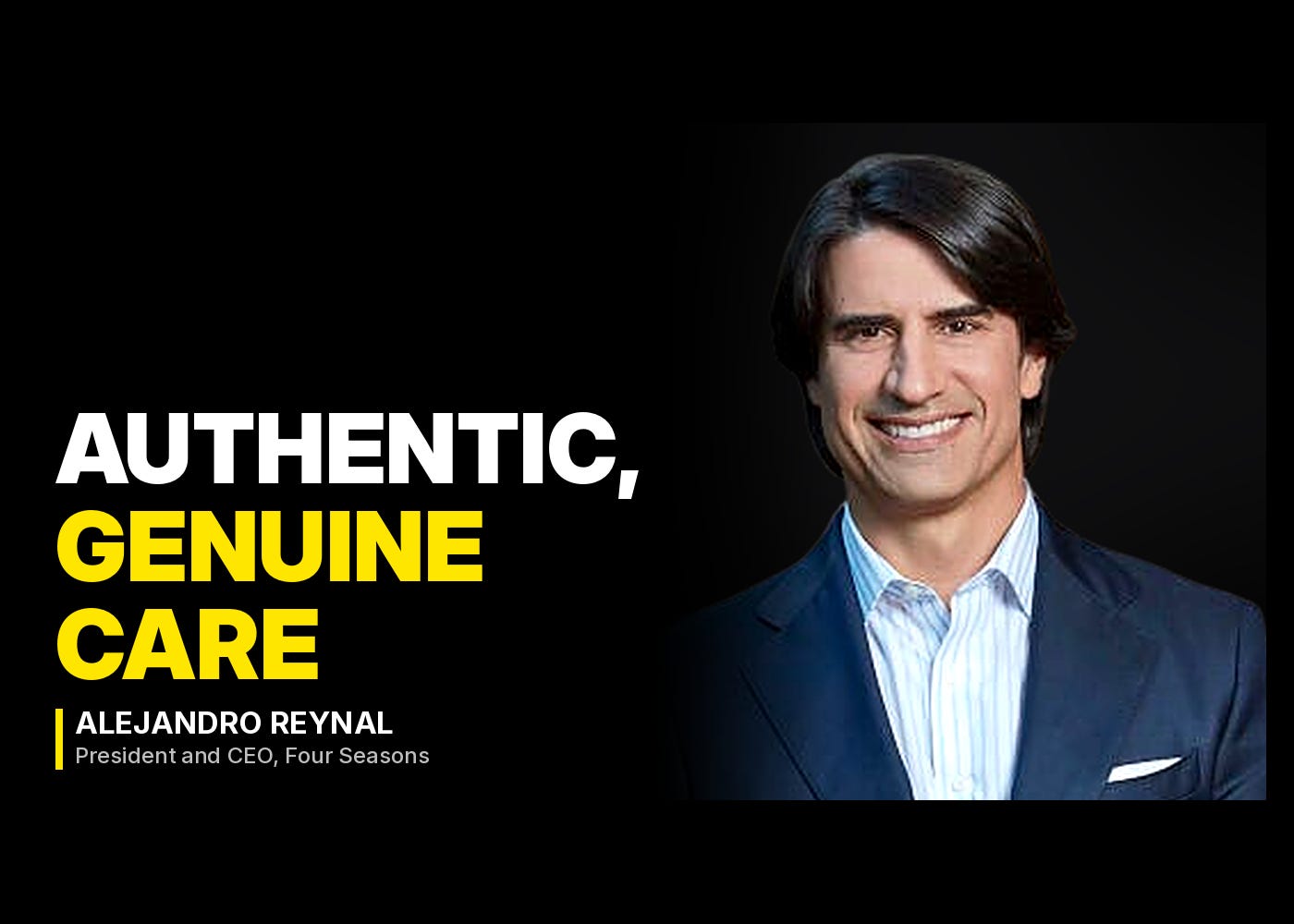
Photo via forbes.com
Four Seasons will use AI behind the scenes but will not put robots in any role that deals with guests, Alejandro Reynal, president and CEO of Four Seasons Hotels and Resorts, told Semafor's "Silicon Valley & The World."
Much of the industry talks about AI as a way to automate service. Alejandro wants it to make his staff better at service, because he sees that service as the company's main advantage.
"The strongest competitive advantage of Four Seasons is service. We're known by the service that we provide, and that's our DNA." — Alejandro Reynal
Alejandro runs a luxury hotel group heading for its third record year in a row, built on a service culture that is 65 years old.
The full interview is covered here so you can skip it.
Here are the 6 takeaways that matter.
Key Takeaways
2025 was Four Seasons' best year on record, and Alejandro expects 2026 and 2027 to beat it
Middle East occupancy fell to single digits when the conflict began, and has recovered to 40–60%
Four Seasons has not slowed its Middle East investment
AI is meant to feed staff better guest information, not to replace the hotels' legacy systems
AI-agent bookings are under 5% of reservations, and agents find the same prices as everyone else
No robots in guest-facing roles, and five to ten years before robots handle back-of-house tasks
1. Three Record Years
Alejandro opened with the numbers. Four Seasons had its best year in 2025, expects to beat it in 2026, and projects another record in 2027.
Four Seasons expects 2027 to be its third record year in a row
"25 was our best year on record. 26 will be the best year on record, and as we see 27 will be another year of record." — Alejandro Reynal
He tied the run to the post-pandemic boom in luxury travel, a shift in consumer spending toward experiences, and the concentration of wealth at the top of a K-shaped economy, where higher earners pull ahead while others fall behind.
"At this stage and for the foreseeable future I do continue to see a lot of wealth creation and, from that perspective, a lot of additional spending to luxury hospitality." — Alejandro Reynal
He saw no near-term threat to that trend beyond the usual geopolitical and economic risks.
