

Bloomberg Podcasts · Oct 14, 2026
With Jensen Huang, CEO of Nvidia
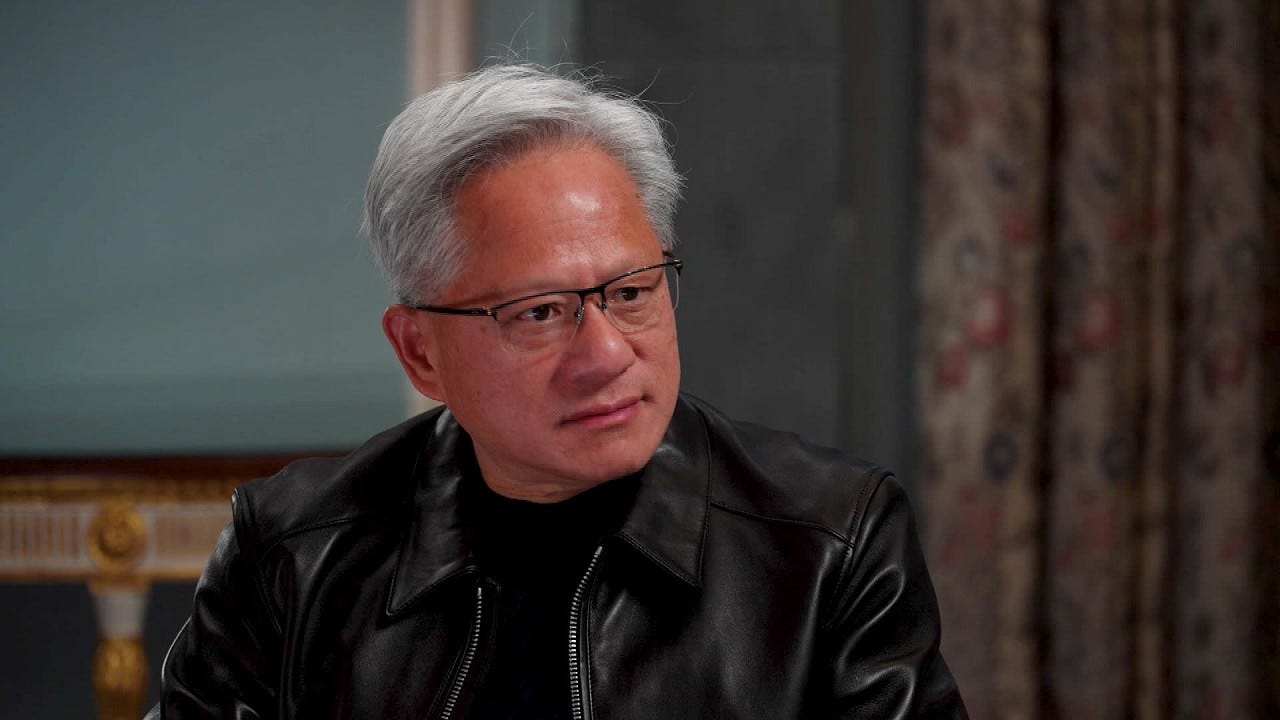
Nvidia would stop selling to an AI lab doing something too dangerous, Jensen Huang, CEO of Nvidia, told Bloomberg Podcasts. He would talk to the customer first.
Sam Altman and Elon Musk have both called for AI development to slow down. Jensen treats that as a false choice, because in his view a safer AI and a more capable AI are the same project.
"It's a mistake to separate AI capability and AI safety...it's one conversation." — Jensen Huang
Nvidia, which Jensen runs, is a major investor in both OpenAI and Anthropic, the two labs whose growth he described in the clip.
The full segment is covered here so you can skip it.
Here are the 5 arguments that matter.
Key Takeaways
Nvidia would stop selling to a customer whose use of its technology was certainly causing harm, after talking to it first
Jensen sees AI capability and AI safety as one conversation, not a trade-off
OpenAI and Anthropic are the two fastest-growing technology companies in history, in Jensen's account
The cost of a token is falling 30 to 40 times a year even as demand for compute rises
Sovereign AI means control of a country's own data, and it can run on American chips
1. Sovereignty Means Control
Jensen defended "sovereign AI," national AI systems that run on American chips. For him, sovereignty is about who controls the data, not who made the hardware.
Jensen Huang defines sovereign AI as a country's control over its own data and knowledge
"Sovereignty basically means that you have to control your own experience." — Jensen Huang
That control covers a country's data and its institutional knowledge. It also covers what Jensen called agency over its own destiny. On that definition, a country can buy its chips from the US and still keep its AI sovereign.
Jensen Huang treats AI as critical infrastructure that must never be cut off
"You can't ever have a denial of service." — Jensen Huang
A denial of service here means losing access to the system. Jensen put that freedom alongside data control as the second part of sovereignty.
