

Latent Space: The AI Engineer Podcast · Oct 31, 2026 · 28m · 21m saved
With Joseph Kim, Head of Financial Services at OpenAI
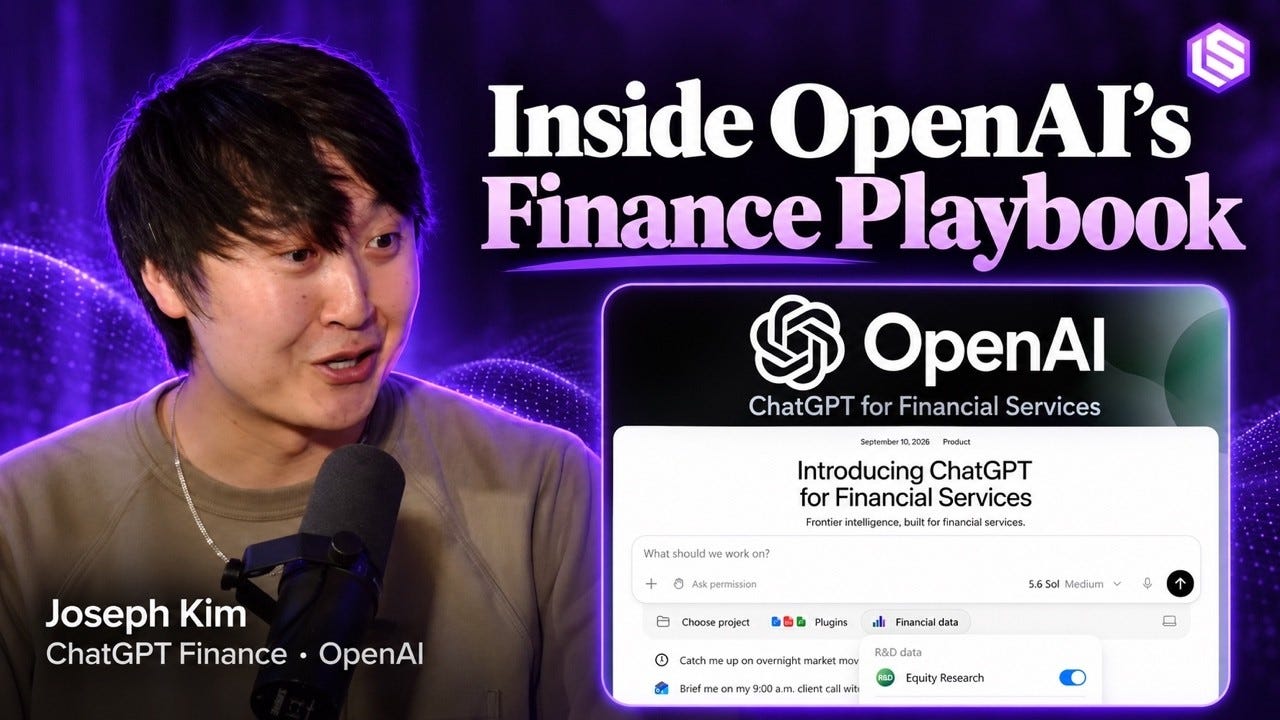
OpenAI tested the outside data connectors in ChatGPT's store and found some well-known ones running error rates above 40%. Joseph Kim, head of financial services at OpenAI, told Latent Space: The AI Engineer Podcast that this is why ChatGPT for Financial Services ships with its own financial data rather than relying on them.
Most of what his team built, Joseph said, is open to anyone. It sits on the same plugin architecture and building blocks that any outside developer can use, and he expects someone to build a billion-dollar business on a single ChatGPT plugin.
"I really do think that there's going to be a billion-dollar business built on top of a ChatGPT plugin." — Joseph Kim
Joseph runs the team behind ChatGPT for Financial Services, which was shaped with Morgan Stanley and Evercore as design partners, and he describes it as working "kind of like a startup that's building on top of OpenAI technology."
The full interview is covered here so you can skip it. 28 minutes of audio, 7 minutes of reading.
Here are the 7 takeaways that matter.
Key Takeaways
OpenAI found error rates of 40% or more on some well-known outside data connectors, so it brought financial data in-house
95% of ChatGPT for Financial Services could have been built by a startup, Joseph says
The missing 20% that Codex does not provide is where he sees a billion-dollar plugin business
Career-ending mistakes are factual errors that change a conclusion, and they are getting rarer
What models still lack is taste: knowing a slide looks sloppy when nothing in it is wrong
OpenAI does not think a good eval for financial work exists today
OpenAI's GPT-6 Astra model saturated the existing ones
1. Why OpenAI Bundled Data
Joseph said the hardest product decision behind ChatGPT for Financial Services was data. Bundling quarterly earnings transcripts and other data looked redundant on paper, because connectors built on MCP, the standard for linking outside tools to a model, were already in the store. Customers might also feel they were paying twice.
OpenAI tested the outside connectors and found some failing more than 40% of the time
"We tested all these MCPs. And what we found was the error rates were really really high. Some of the MCPs that we connected, some big names, 40% plus error rate on their MCPs." — Joseph Kim
That result pushed the team to own the data pipeline end to end, a decision Joseph said customers have specifically praised.
"The only way we can go about fixing this at scale is to bring the data in-house, like just control that experience end to end. And the extra money that you pay on top to bundle that data is worth it." — Joseph Kim
He took a broader lesson from it about building in finance: reasoning from first principles can mislead a team that ignores the actual state of an industry and the competitive forces inside it.
