

The Best One Yet · Nov 6, 2026 · 26m · 19m saved
With Baiju Bhatt, Co-founder of Robinhood and Founder of Cowboy Space
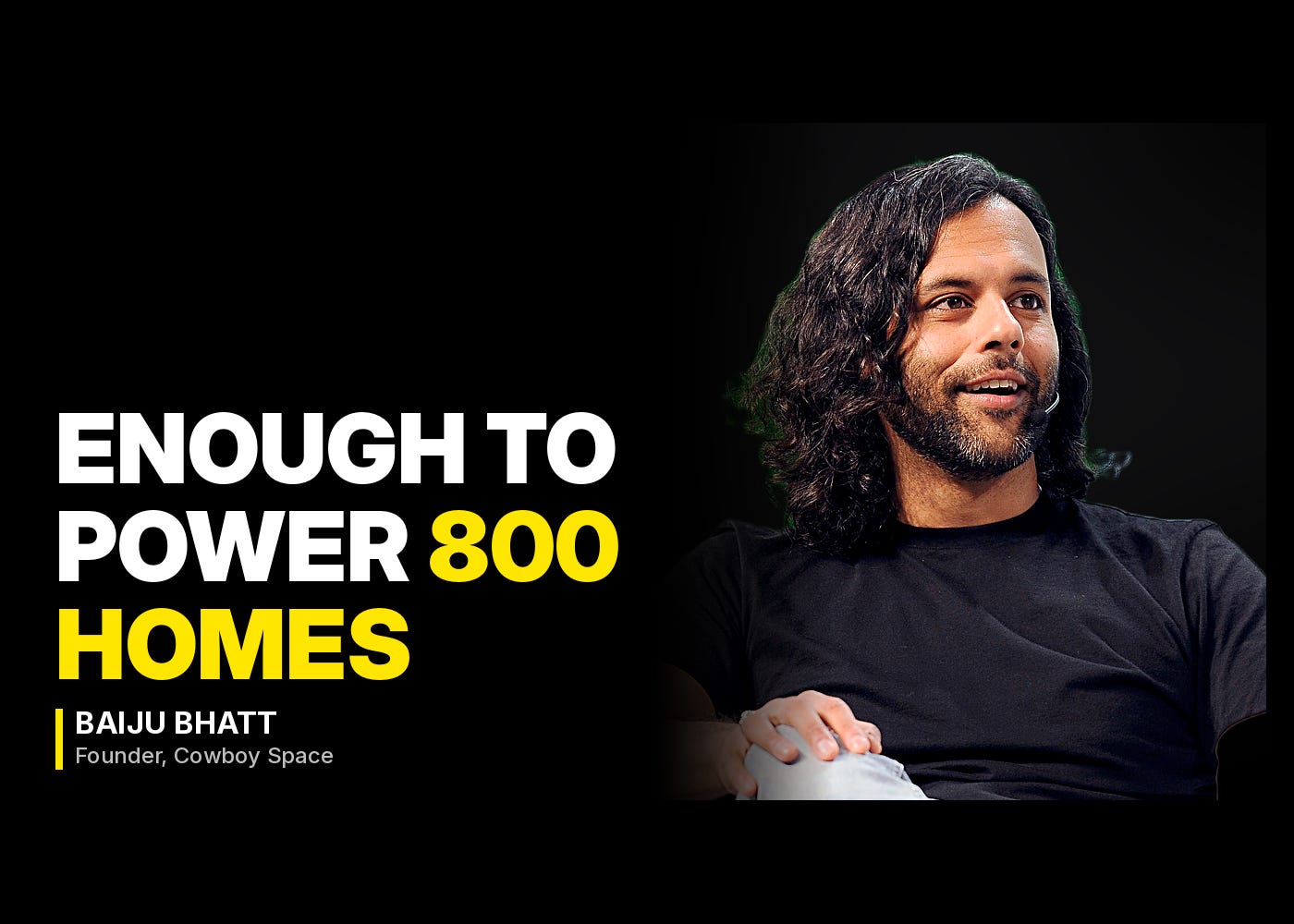
Photo: TechCrunch, CC BY 2.0 via Wikipedia
Cowboy Space's rocket doesn't stop at reaching orbit: its upper stage unfolds into a 15,000 kg data center once it gets there. Baiju Bhatt, who co-founded Robinhood, isn't selling rocket rides like the rest of the launch industry; he wants to sell the computing that happens after liftoff, at the same price as a data center built in Texas.
"How can you produce the same thing that you would be getting from the data center that would have been built in Texas, from outer space, at the same cost?" — Baiju Bhatt
Baiju says a chemistry teacher's gift of "The Case for Mars" set the plan in motion, and Robinhood's success gave him the money to build it himself.
The full interview is covered here so you can skip it. 26 minutes of audio, 7 minutes of reading.
Here are the 7 takeaways that matter.
Key Takeaways
Cowboy Space's upper rocket stage becomes a 15,000 kg data center once it reaches orbit
Its solar panels are the size of a football field and produce about a megawatt of power, enough for 800 homes
The pitch is cost parity with a data center built in Texas, without the water or air pollution of building one on the ground
Its first satellite, Reason 1, is testing laser power beaming from orbit to the ground — something Baiju says has never been done, despite NASA and the Department of Energy studying it since the 1970s
Cowboy Space is building its own rockets rather than booking launches, because it expects commercial launch capacity to tighten as bigger rocket companies serve their own payloads first
Baiju calls SpaceX "the Empire" — it controls about 84% of global rocket launches and is valued around $2 trillion
He isn't surprised by the backlash against data centers, because he says most Americans live too close to their paycheck to absorb the cost
Cowboy Space expects to blow up rockets during testing, and keeps unit costs low enough to absorb it
1. From Robinhood To Rockets
A chemistry teacher's gift shaped Cowboy Space's rocket design.
"I got that book from my high school chemistry teacher... if I ever get a chance to be a part of the space industry and I don't do that in my lifetime, that's one of the things I'm really going to regret." — Baiju Bhatt
The book, Robert Zubrin's "The Case for Mars," is what Baiju calls the conceptual blueprint behind SpaceX's reusable-rocketry approach. He told Robinhood's earliest employees he'd start a space company himself "if I ever hit it big at this finance thing," and Cowboy Space, formerly called Aetherflux, is roughly two and a half years old. Baiju moved his family to Seattle the week of the 2026 midterms and now runs the company out of a warehouse in Kent, Washington, a commute he calls "really freaking far" — worth it, he says, for the city's deep bench of rocket engineers.
