

Sourcery with Molly O'Shea · Nov 5, 2026 · 41m · 30m saved
With Will Marshall, Co-Founder and CEO of Planet Labs
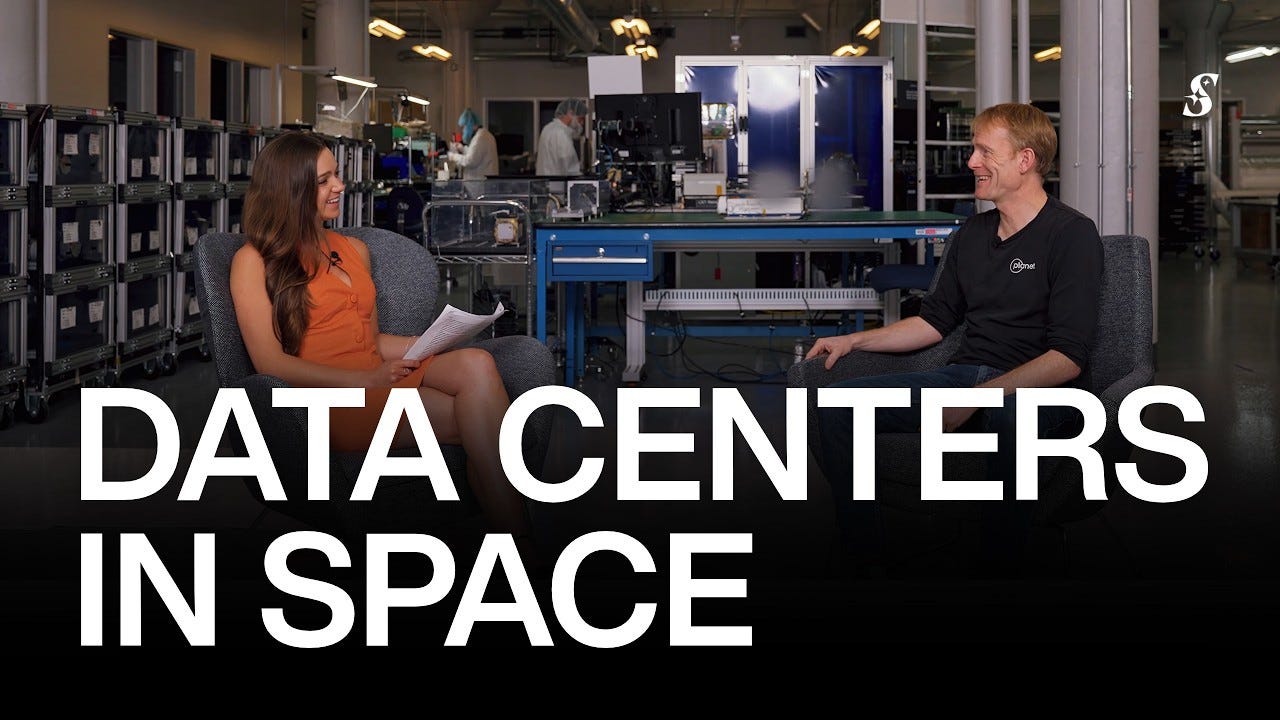
Planet Labs photographs the entire landmass of the Earth every day, and Will Marshall, its co-founder and CEO, told Sourcery with Molly O'Shea that the company's next business is computing in orbit, not just imaging.
Most of the AI industry is building data centers on the ground and backing up solar power with gas or nuclear for nights and cloudy days. Will says a satellite in a sun-synchronous orbit never has that problem.
"Data centers is all an energy problem. In space, for each solar panel, you get five times more power than you get on the ground because you can put them in a sun-synchronous orbit that is always looking at the sun." — Will Marshall
Will came out of NASA, and his company has turned satellites that once filled the space of a double-decker bus into an automated production line. Planet now runs a fleet that only Starlink beats on satellite count, and it launched a compute test for Google the week before the interview.
The full interview is covered here so you can skip it. 41 minutes of audio, 11 minutes of reading.
Here are the 7 insights that matter.
Key Takeaways
Planet's revenue grew 58% year on year last quarter, and defense was the fastest-growing part
Countries now want to own their satellites, not just buy the pictures
Sweden's first satellite went up 4 months after signing, against 5 to 10 years in normal aerospace
Some of the hyperscalers buy Planet's data to track rivals' data-center construction
A solar panel in orbit gets 5 times the power it gets on the ground, Will says, with no batteries and no water for cooling
Planet flew its first data-center test for Google, a project called Sun Catcher
AI turns satellite imagery from an expert's tool into something a farmer can ask questions of
Will says persistence and endurance matter more than timing or the idea in deciding which founders succeed
1. Why Planet Builds in SF
Molly O'Shea, who hosts Sourcery, recorded the interview on a tour of Planet's satellite factory in San Francisco. The founding team came out of NASA near Mountain View, and Will explained why the company chose the city instead.
Planet moved to San Francisco because that is where young engineers want to work, Will says
Will said Anthropic, OpenAI and Google's Gemini team are all a few blocks away, and that the engineers Planet hires want to live in the city. He described how the company shrank satellites that were once as big as a double-decker bus into a far more automated, lower-cost manufacturing process.
That process is what lets Planet image all of the Earth's land every day. Will said no other company has matched that coverage, and only Starlink operates more satellites.
