

This Week in Startups · Nov 23, 2026 · 54m · 45m saved
With Alex Elias, Founder and CEO of Qloo
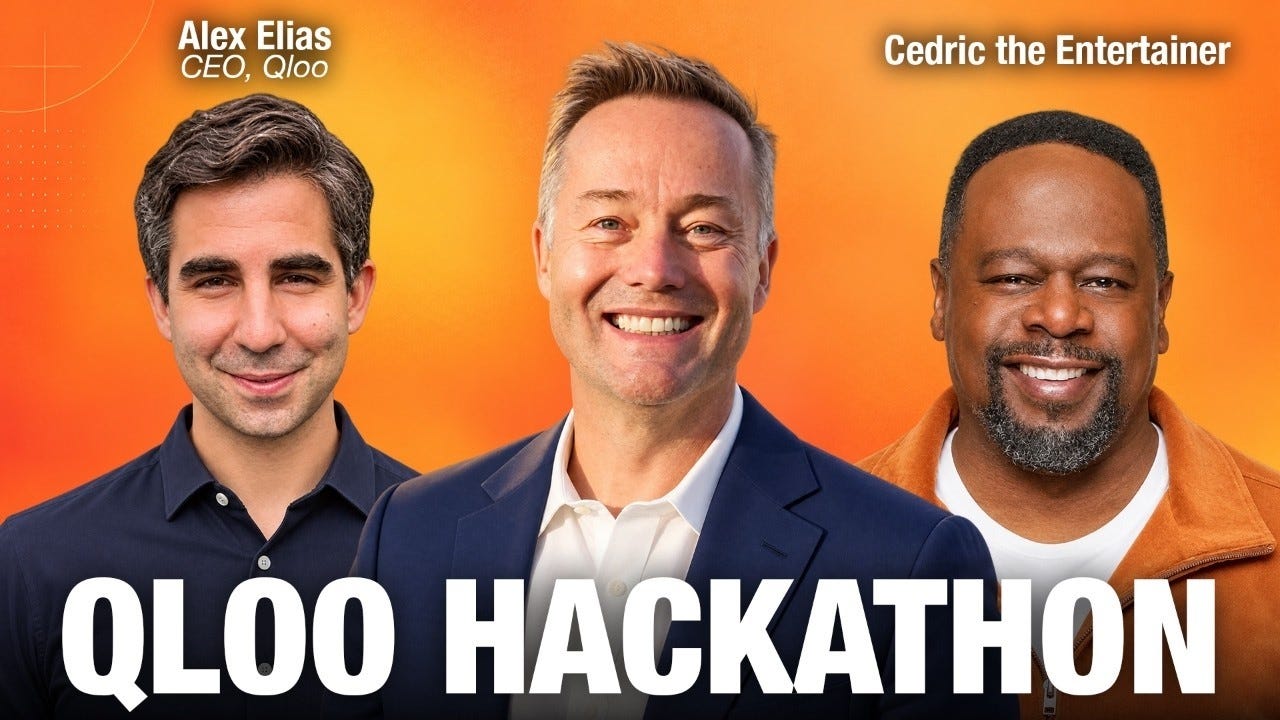
Nearly 3,000 developers entered Qloo's Agentic Hackathon to build AI agents on the company's taste data. Alex Elias, founder and CEO of Qloo, judged the three finalists live on This Week in Startups, alongside host Jason Calacanis, co-host Lon Harris and comedian Cedric the Entertainer, an early Qloo investor.
Most AI agent demos book a meeting or run a workflow. Alex said the harder problem, and the bigger market, is an agent that understands someone well enough to be trusted with their money.
"Everyone knows that the person who cracks the nut on being willing to delegate, it's one thing to delegate an agent to like book a calendar invite or just a workflow spec of any sort, but to actually delegate spend is kind of the final frontier of us trusting it to understand this as people." — Alex Elias
Alex has spent 15 years building Qloo's data on what people like, starting a decade before ChatGPT existed. Michelin, Tablet Hotels and Amex are among the customers that use it.
The full episode is covered here so you can skip it. 54 minutes of audio, 9 minutes of reading.
Here are the 8 moments that matter.
Key Takeaways
Qloo sells taste data through an open API, the kind of data Spotify and Netflix build only for themselves
Alex calls delegating spending to an agent the final frontier, worth "$100 billion plus" in travel and entertainment alone
Undertow predicted 32 of 33 states from taste data, one more than betting markets and polls
Backline books a whole trip at real flight prices and pays for it from a built-in wallet
The judges split between the product they wanted and the business they could see
Undertow won on points, while Lon Harris and Cedric ranked Backline first
Alex sees the VR relaxation app Roomful as a dark horse, comparing it to Jason's early bet on Calm
1. Qloo Sells Taste Data
Alex told Jason that Qloo has spent 15 years assembling data on restaurants, music, film and consumer brands. Companies such as Spotify, Netflix and Expedia build this kind of recommendation data for their own use, while Qloo offers it to outside developers and enterprises through an open API.
Alex Elias says Qloo has built some of the deepest data available on what people like
"We basically have developed kind of some of the deepest knowledge graphs and ontologies about taste. So you think about all things culture, whether it's POIs, restaurants around the world, music, film, the transactional categories like consumer brands, we bring it all together." — Alex Elias
A knowledge graph is a database of how things relate to one another, here the restaurants, songs, films and brands people like.
