

CNBC Television · Sep 24, 2026
With Kate Moore, Chief Investment Officer at Citi Wealth
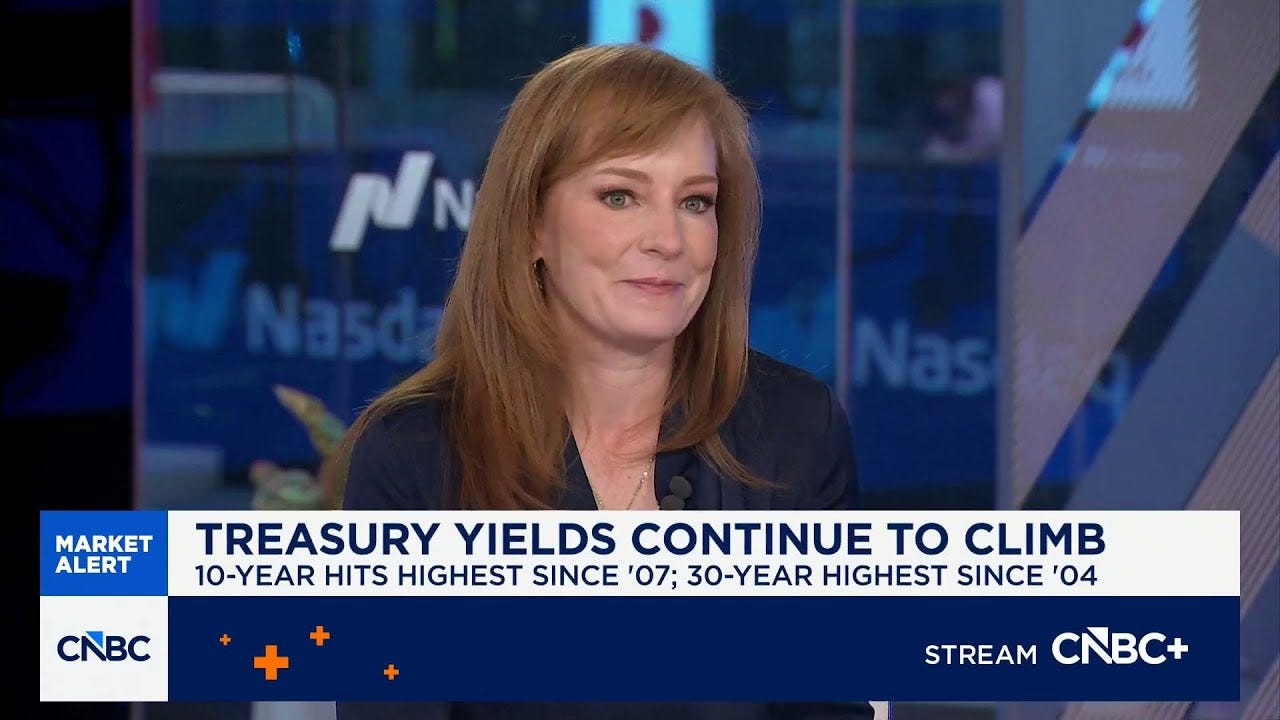
Since the lows of February 27, the 10-year Treasury yield has risen 119 basis points, and Kate Moore said 109 or 110 of them came from higher real yields rather than from higher expected inflation.
Clients keep asking at what yield she would start buying long-term bonds. She did not name one. She expects more structural support for higher yields over the medium term, and has put some of the money that would have gone into long-term bonds into gold instead.
"That bonds are by definition balanced in portfolios and they have not been acting that way for some time."
Kate Moore, chief investment officer at Citi Wealth, on CNBC, has kept her clients underweight long-term bonds for her whole time at the firm, about 18 months.
The full segment is covered here so you can skip it.
Here are the 5 calls that matter.
Key Takeaways
Real yields drove almost all of the 10-year's rise since February, not higher inflation expectations
She has kept clients underweight long-term bonds for her 18 months at Citi and put some of that money into gold
Crypto is not part of her recommended liquid portfolios, though she supports clients who want it
The 60/40 portfolio should be challenged, using commodities, gold and infrastructure
Bonds have not balanced stocks in portfolios for some time, she said
1. Underweight Bonds, Long Gold
The anchor said Moore's cautious stance on long-term bonds had been reinforced by the recent jump in Treasury yields, and asked at what level she would buy 10-year Treasuries.
Moore said clients ask the same question all the time, because Citi Wealth has been significantly underweight long-term bonds for her whole time at the firm, about 18 months. She said it has been underweight fixed income in general, and that the bonds it does own are shorter-dated, which has done very well.
She moved money from long-term bonds into gold
"I've taken some of the money that would otherwise be in long duration bonds and actually allocated that to gold and gold has outperformed significantly fixed income." — Kate Moore
An anchor asked whether she is allowed to do that, since many investors are held to fixed buckets. She said yes, and that it is part of a reboot of asset allocation for Citi Wealth clients toward more flexibility and investing aimed at specific outcomes.
