

Masters of Scale · Oct 20, 2026 · 29m · 22m saved
With Mary Beth Laughton, President & CEO of REI Co-op
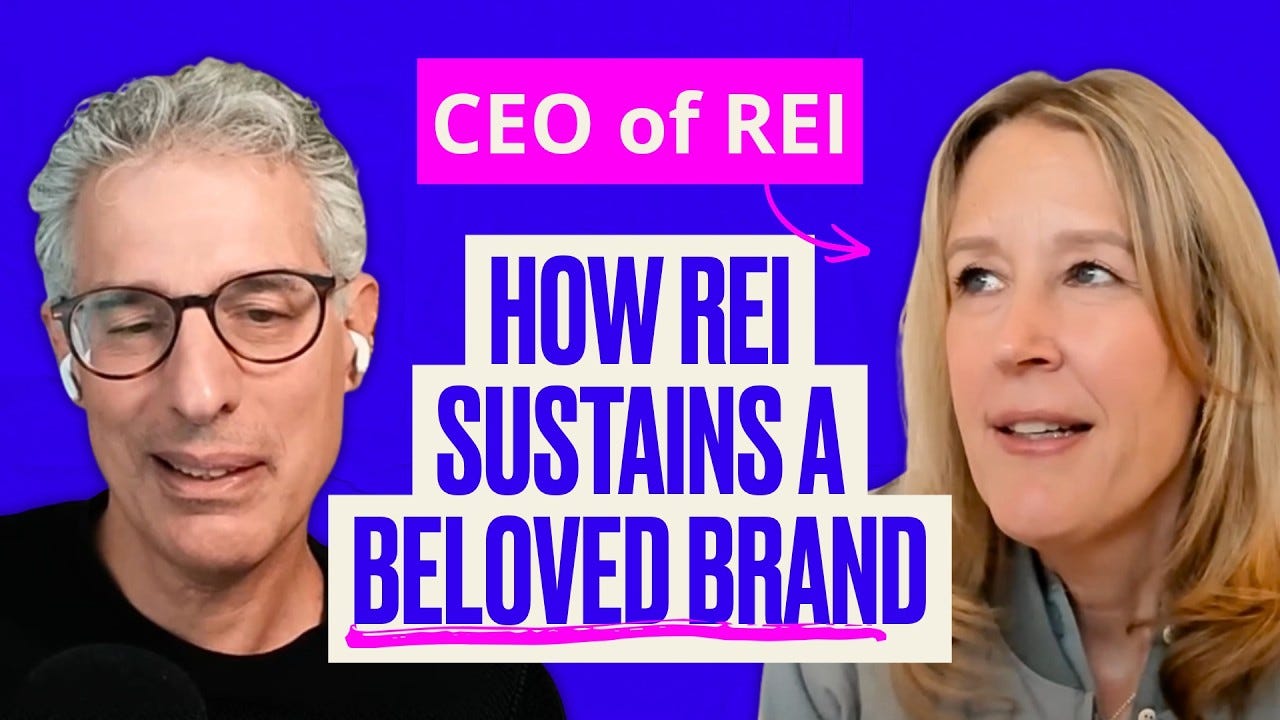
REI has no shareholders and holds no quarterly earnings calls, but its chief executive still says the business has to turn a profit or the model fails. Most retail chains answer to Wall Street every ninety days. Mary Beth Laughton, president and CEO of REI Co-op, told Masters of Scale's Rapid Response that REI answers instead to 26 million members who paid a one-time $30 fee, expect a 10% dividend on their purchases, and expect the co-op to take a stand on everything from public lands to a union dispute.
"The biggest thing at stake, I think, is making sure we can be around for another 88 years." — Mary Beth Laughton
Mary Beth took over at REI in early 2025 after scaling Sephora's US e-commerce business from roughly $250 million to more than $1 billion and running Athleta as chief executive — retail experience she now says is shaping how hard REI chases AI shopping agents.
The full interview is covered here so you can skip it. 29 minutes of audio, 7 minutes of reading.
Here are the 5 takeaways that matter.
Key Takeaways
REI's co-op structure means no shareholders can bail out a bad year — the business has to fund itself
A $30 lifetime membership buys a 10% annual dividend and a loud voice
Mary Beth rescinded REI's endorsement of Doug Burgum for Interior Secretary within her first months as CEO
She called some of his positions "at odds with who we are as a co-op"
A union-backed boycott targeted the sale that funds REI's own employee bonuses
Heavy AI bot traffic on REI's site is a cost of doing business, not a threat to block
She compares the moment to the dot-com boom of the late 1990s
REI's green-vest staff, who have actually climbed the mountains they sell gear for, are the one thing AI can't replicate
Scaling Sephora from $250M to over $1B taught her to be a fast follower, never a first mover
Athleta's inclusive-sizing bet showed values can pay off without raising prices
1. No Shareholders, No Excuse
REI is the largest consumer co-op in the US, and Mary Beth says that structure changes what the business is accountable to. There is no board of outside investors demanding quarterly growth, but there is no exemption from having to make money either.
REI has no shareholders, so its own cash flow is the only thing funding its mission
"We don't have any shareholders. We're a private company, so we really rely on creating our own profit and our own cash flow, and we've got to be a profitable business and have a strong and healthy business for the model to work." — Mary Beth Laughton
The 26 million members who join for a one-time $30 fee are not equity owners, but Mary Beth says they act like one anyway. Each year they collect a 10% dividend on what they spent at REI, and that check buys them standing to challenge the people running the co-op.
"They're not technically shareholders, but they do have such a vested interest. They hold us to a really high bar." — Mary Beth Laughton
That bar is why her first six months as CEO went into listening rather than announcing changes. The result was a turnaround plan she calls "Peak 28," aimed at member engagement and retail fundamentals that had slipped over the "last few years."
