

Kleiner Perkins · Nov 9, 2026
With Parker Conrad, Founder and CEO of Rippling
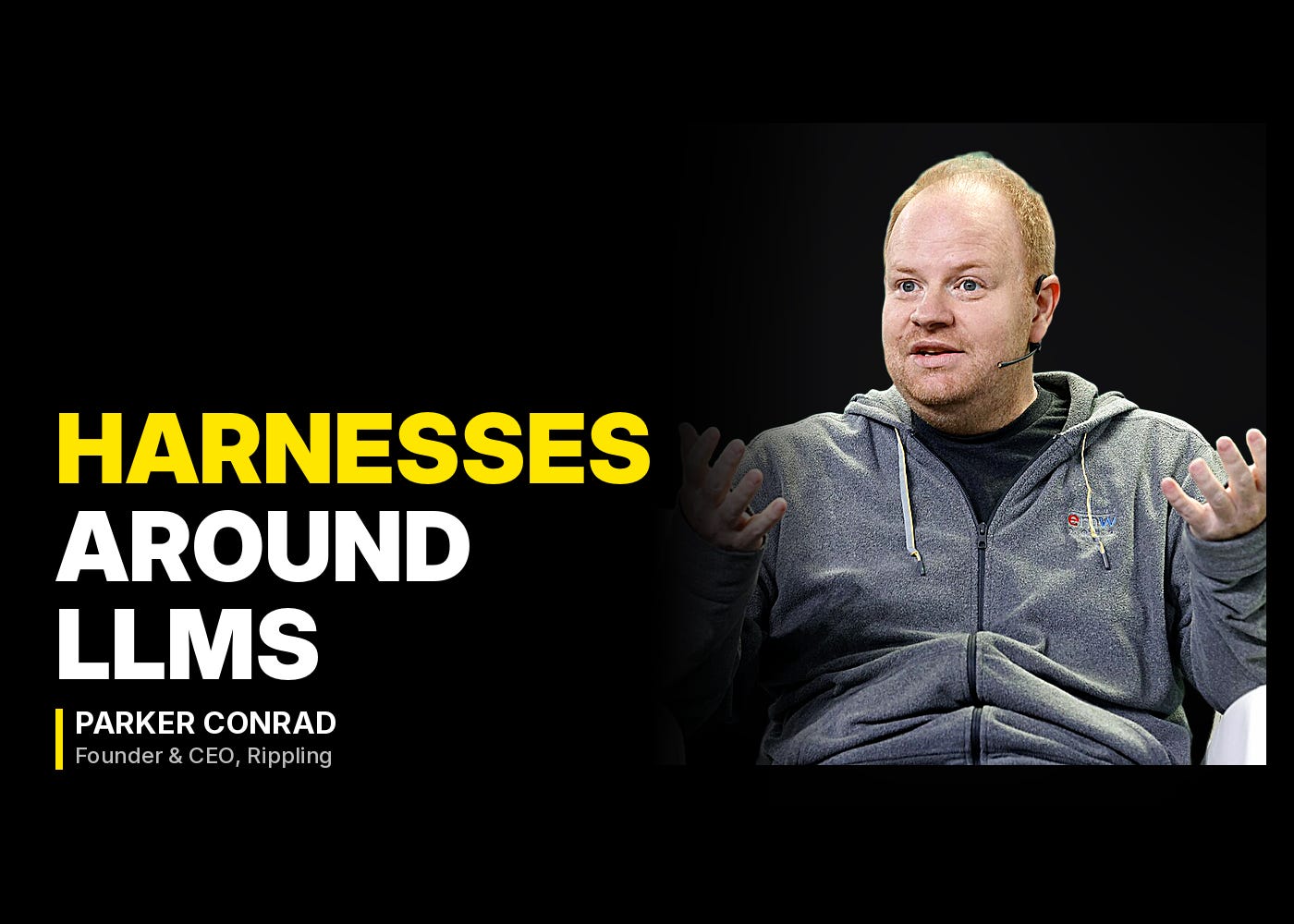
Photo: TechCrunch, CC BY 2.0 via Wikimedia Commons
Rippling writes software shared by 100,000 customers, and Parker Conrad expects a growing share of its roadmap to be code an LLM writes for one customer at a time. Parker, founder and CEO of Rippling, made the case in the first episode of Kleiner Perkins' Leaders interview series. Parker's argument is that the value sits in what surrounds the model: domain tools, work orchestration and, above all, permissions, which he says most people building enterprise AI overlook.
"Some of that data is sensitive... you can't really trust the LLM to appropriately redact the information that it has access to." — Parker Conrad
Parker built Rippling on HCM data, the org records that decide who reports to whom, and HCM software comes with controls over who sees which record. That is why he treats permissions as the problem to solve first.
The full interview is covered here so you can skip it.
Here are the 7 principles that matter.
Key Takeaways
HR, finance and sales systems will become harnesses around an LLM, with the model at the center
AI makes Rippling's "go and see" principle much easier to follow, if the data can be trusted
An LLM cannot be trusted to redact sensitive data on its own
HR software's row-level permissions are the fix, and general platforms barely have them
Moving money, filing taxes and shipping computers are what make a harness worth more than a generic system
Rippling's roadmap is splitting between code for 100,000 customers and software built for one
Solve permissions and executives get real-time context instead of reports filtered up through managers
1. Systems Become Harnesses
Parker expects HR, finance and sales software 5 to 10 years from now to put the model at the center, with everything else built around it.
Parker Conrad expects core business systems to become harnesses around LLMs
"I think they are going to look like giant harnesses and orchestration systems around LLMs." — Parker Conrad
Each harness is specific to its field. Parker describes it as the model plus a set of tools for one domain and the work routing that ties them together.
Parker Conrad says each harness pairs domain tools with work orchestration
"You're going to have this sort of specialized harness, a bunch of very specialized domain specific tools and a bunch of work orchestration around that domain." — Parker Conrad
