

Silicon Valley Girl: AI, Tech and Career Growth · Nov 24, 2026 · 55m · 43m saved
With Vlad Tenev, Co-founder and CEO of Robinhood
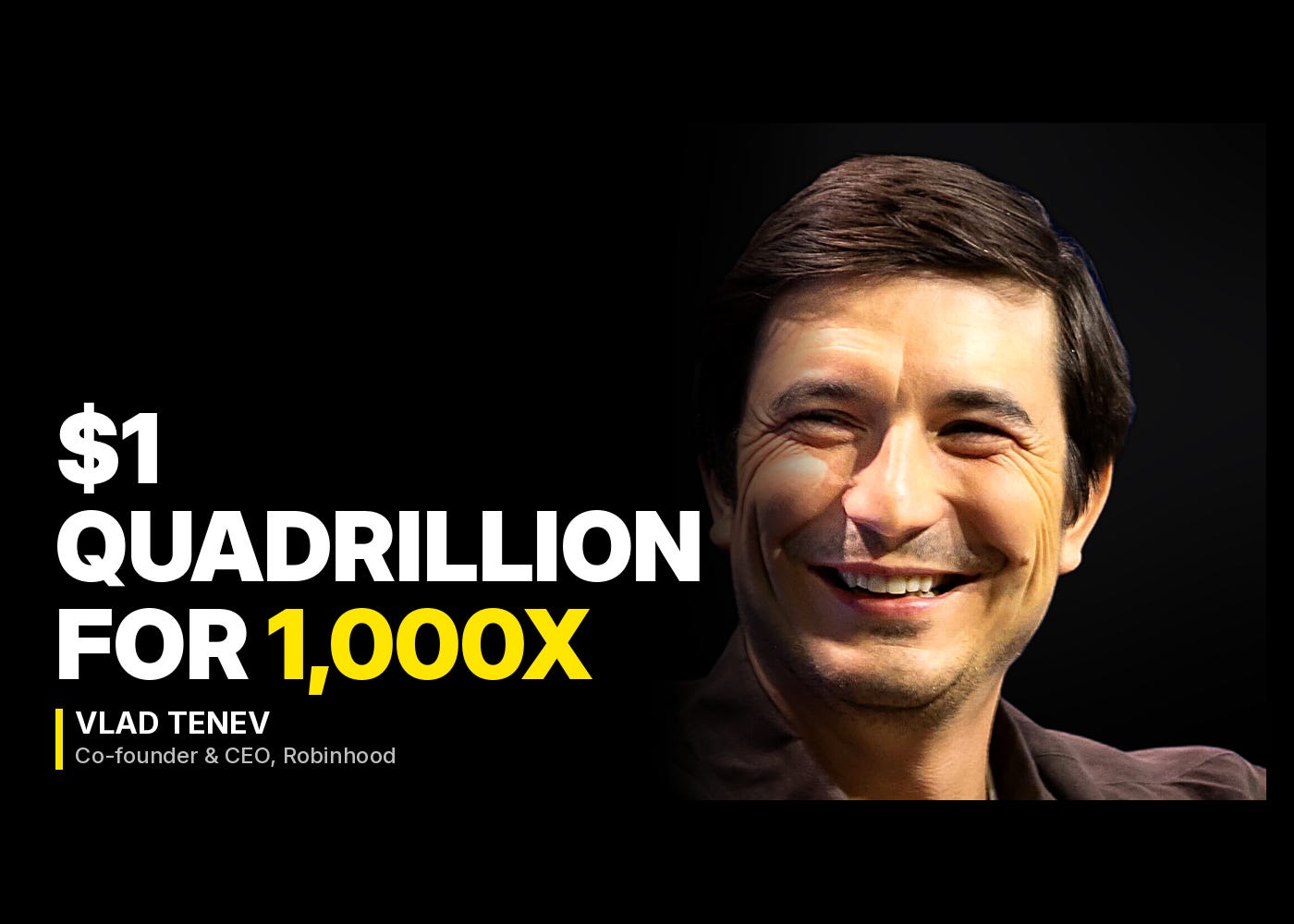
A company that goes public at a $1 trillion valuation would have to reach $1 quadrillion to return 1,000 times its listing price. Vlad Tenev, co-founder and CEO of Robinhood, made that case on Silicon Valley Girl to explain why he wants retail investors in AI companies before they list.
Apple, Amazon and Home Depot made their early public shareholders rich because they listed small. Vlad's point is that today's AI leaders do most of their growing while still private, so public-market investors arrive after most of the gains.
"If more people don't start doing what we're doing and kind of innovating in the private markets frontier, there's a good chance that an entire generation could be left behind of these gains." — Vlad Tenev
Vlad built Robinhood to give ordinary investors the access the wealthy already had, and ran it through a 2022 collapse that took 90% off its market value. He grew up through hyperinflation in Bulgaria and bought his first stock at 13.
The full interview is covered here so you can skip it. 55 minutes of audio, 12 minutes of reading.
Here are the 13 lessons that matter.
Key Takeaways
A company listing at $1 trillion would need a $1 quadrillion valuation to return 1,000x
Robinhood runs AI trading agents in a segregated account, apart from a customer's main holdings
A prompt like "make me money" is unlikely to find an edge, in Vlad's view
Robinhood customers had their largest equities trading day ever buying a dip in AI stocks
Robinhood's stock fell from $75 to below $7 in less than a year after its IPO
Vlad reset by imagining the CEO a board would bring in to replace him
Software is getting cheaper to make, not dying
The trap for a founder is failing slowly
1. The 1,000x Return Is Gone
Vlad opened on the arithmetic, talking to Marina Mogilko, founder of Silicon Valley Girl. Home Depot listed in the early 1980s at a valuation of around $50 million, he said, which left room for enormous gains.
Vlad Tenev says a $1 trillion listing leaves no room for a 1,000x public-market return
"If a company goes public at a valuation of 1 trillion, to get that thousand-x return in the public markets, it would have to reach a valuation of one quadrillion." — Vlad Tenev
A valuation that size starts to rival the whole global economy. Because so much of an AI company's growth now happens before its IPO, the public investor gets what is left over.
That is the thesis behind Robinhood Ventures, which gives retail investors exposure to private companies before they go public. Vlad called it one of his personal "crusades" and tied it to the reason the company exists.
Robinhood's founding mission was to open up what the wealthy already had
"Robinhood's real origin is to take what the wealthy have enjoyed and have benefited from for a long time and democratize that and make that available to the general public." — Vlad Tenev
Private companies are the latest version of that access in his telling. Stock trading was the first.
