

Core Memory · Nov 12, 2026 · 1h 5m · 57m saved
With Mikkel Vestergaard Frandsen, Founder & CEO, Sceye
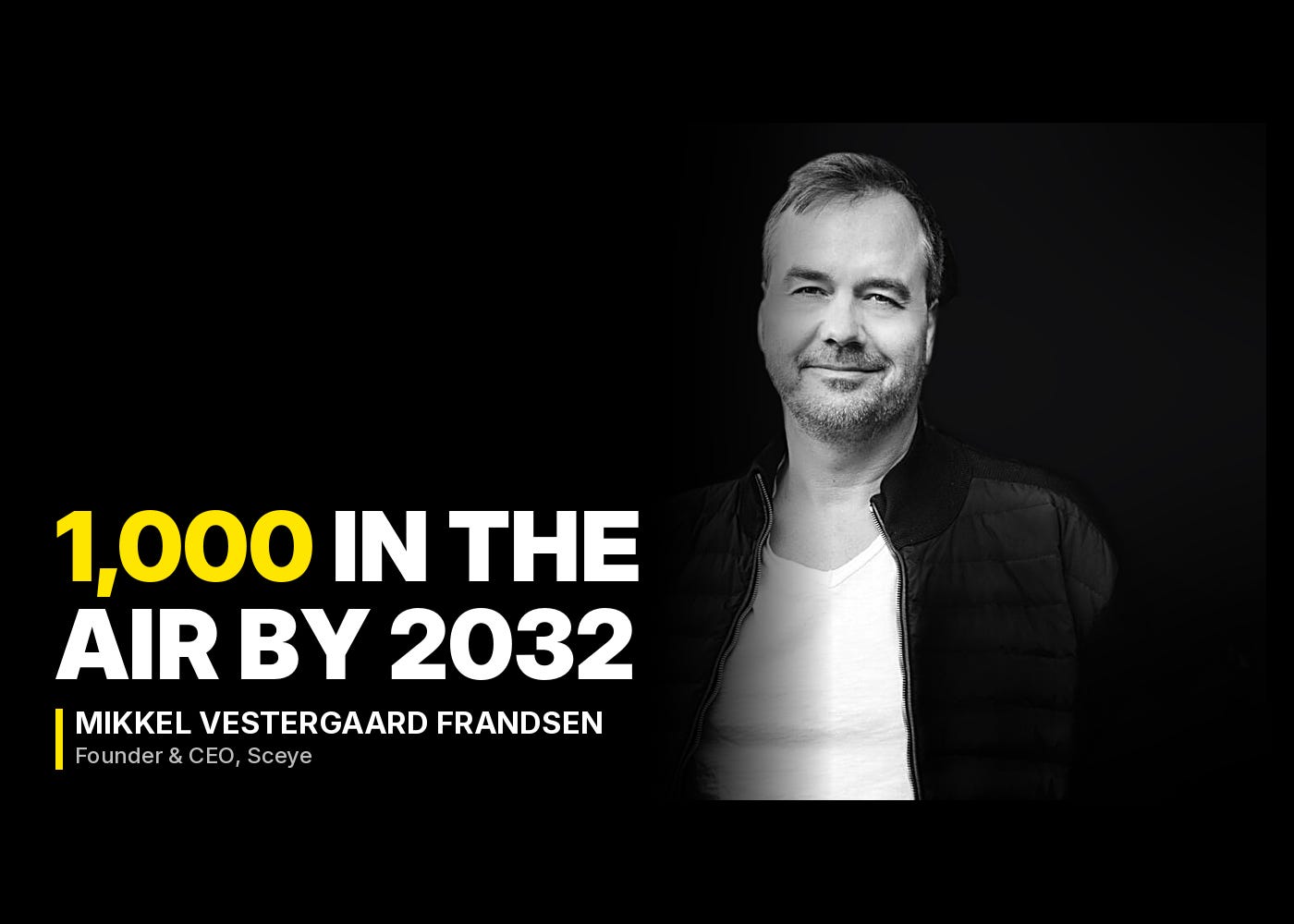
Photo via sceye.com
Guinea worm disease has fallen from 3.5 million cases to about 10 last year, likely making it the second disease ever eradicated without a vaccine, after smallpox. Mikkel Vestergaard Frandsen, founder and CEO of Sceye, told Ashlee Vance on Core Memory that the partnership behind that drop is what convinced him there is no tension between profit and impact. The same conviction holds for the bed nets his earlier company sold, which are credited with most of the recent fall in malaria deaths.
"I want to create a new normal. I want to make this as normal as seeing cars in the street or ships in the port or trains in the tracks." — Mikkel Vestergaard Frandsen
Mikkel took over his family's Africa business at 24 and has since personally put $100 million into Sceye, his stratospheric-communications company, which is flying three missions this year including a SoftBank-backed demonstration over Japan.
The full interview is covered here so you can skip it. 65 minutes of audio, 8 minutes of reading.
Here are the 6 takeaways that matter.
Key Takeaways
Guinea worm cases fell from 3.5 million to about 10 last year, a drop Mikkel credits partly to a LifeStraw partnership with the Carter Center
PermaNet bed nets get credit for roughly 70% of the recent drop in malaria deaths, from 1.3 million a year to under 600,000
Sceye grew out of a NASA report, reimagined after Google's Loon and Meta's Aquila failed because fixed-wing aircraft are the wrong shape for the stratosphere
Sceye's platform flies about 30 times closer to the ground than low-Earth-orbit satellites, and 1,800 times closer than geostationary ones
Mikkel has put $100 million of his own money into Sceye, on top of a $126 million Series C that brought total funding past $200 million
Sceye is flying three missions this year, including a SoftBank-backed flight over Japan, with an ambition of 1,000 platforms aloft by 2032
1. From Lagos to Public Health
Mikkel traced his path from his family's corporate-clothing business, founded in Denmark in 1957 on an $800 loan, through importing trucks and engines in Lagos, Nigeria at age 19. A 1993 military coup ended that venture. At 24 he bought out the business's Africa subsidiary from his father, when the wider family textile business had revenue under $5 million. He pivoted the company into material science applied to public health, food security and safe drinking water.
A partnership with the Carter Center nearly eradicated Guinea worm
"Last year it was down to 10 cases in total from three and a half million where we started — likely the second disease ever to be eradicated without the use of vaccines." — Mikkel Vestergaard Frandsen
His company's PermaNet insecticide-treated bed nets passed one billion distributed three years ago, and he said a recent Nature article credited them with most of the recent drop in malaria deaths.
"Three years ago we celebrated net number one billion... malaria rates have gone from 1.3 million, mainly children, dying every year to last year less than 600,000." — Mikkel Vestergaard Frandsen
Mikkel rejects any tension between the two halves of his career: "there shouldn't be any conflict between doing business and doing good," he said, arguing financial sustainability is what lets humanitarian work scale.
