

Forbes · Nov 16, 2026 · 32m · 24m saved
With Danny Meyer, Founder of Union Square Hospitality Group and Chairman of Shake Shack
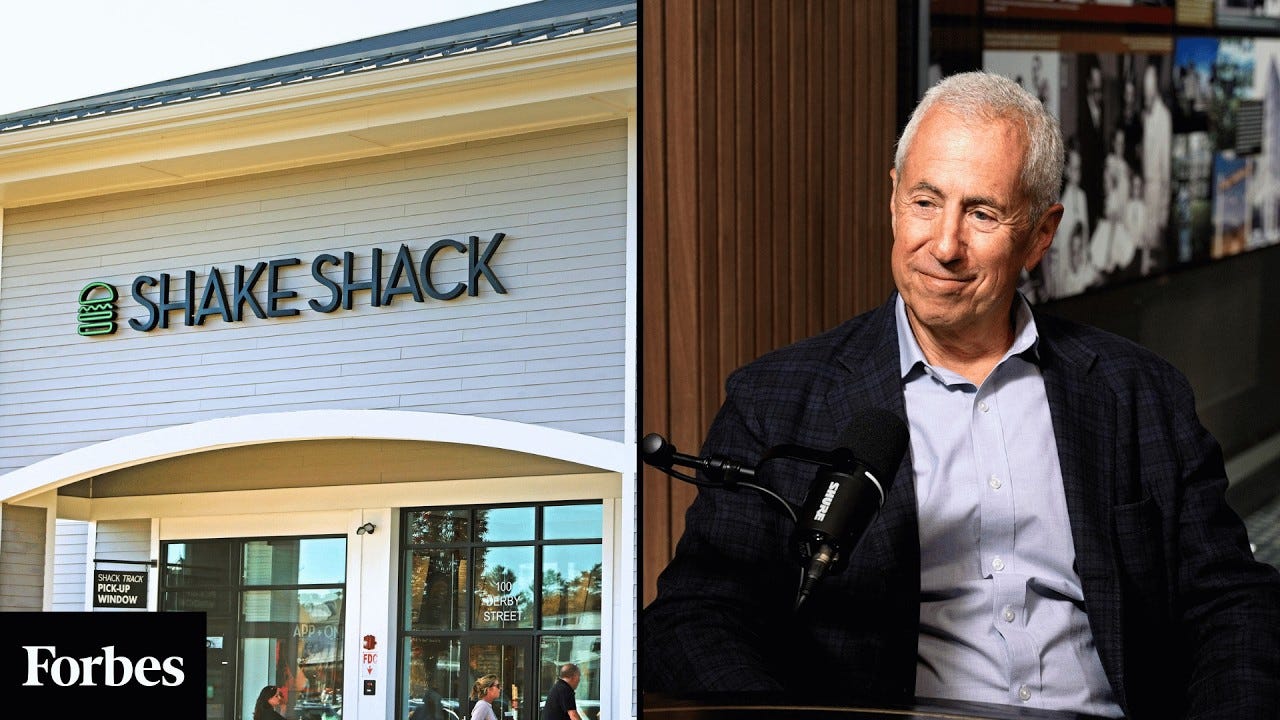
It took five years to open a second Shake Shack after the first hot dog cart, Danny Meyer, founder of Union Square Hospitality Group and chairman of Shake Shack, told Forbes, and the chain's growth to about 700 locations was never a goal.
Most restaurant chains are built from a rollout plan. Danny said the cart began as a test of whether hospitality could work outside a full-service restaurant, and that growth came only after customers kept lining up.
"I never woke up one morning saying let's have a hot dog cart... I wanted to see if the power of hospitality is not just the domain of a fancy full-service restaurant." — Danny Meyer
Danny opened Union Square Cafe, Gramercy Tavern and Eleven Madison Park in New York before the cart in Madison Square Park grew into a public company, and he has written about the mistakes he made scaling it.
The full interview is covered here so you can skip it. 32 minutes of audio, 8 minutes of reading.
Here are the 9 principles that matter.
Key Takeaways
The gut should outweigh the brain when a talented employee is bad for the team
Every stage of growth required Danny to learn a new way to lead, from one restaurant to a public company
A $214-a-week campaign job with 25 unpaid volunteers taught him to lead through purpose
Shake Shack took five years to reach a second location, and 700 was never the target
The "Shack Trap" was approving expansion ideas to lift morale, not because Danny believed in them
A cold-press juice business was his example
A business is essential when life would feel worse without it, which takes mind share first and then heart share
AI can teach every task in a restaurant except making people feel cared for, Danny said
1. Gut Over Brain
Danny's central rule as a leader is to give more weight to his gut than to his brain. He described the gut as a summary of a person's life experience and values that cannot put itself into words, while the brain is good at building a case for the easier choice.
Danny Meyer trusts his gut most when it speaks loudly
"Generally, when your gut is speaking really loudly, it knows what it's talking about even though it's not using its words... it's all the life experiences you've had plus what your personal value system is." — Danny Meyer
His standing example is a kitchen's best pasta cook who is bad for the team. The brain wants to keep him for his skill. The gut puts the team's morale first. Danny has kept that argument going through his career, including the choice of restaurants over law or politics and the decision to open the first hot dog cart.
"Your gut goes, get rid of him. He's not good for the team... it's a constant dialogue, I think, for most of us between our gut and our brain." — Danny Meyer
