

BusinessDayTV · Sep 28, 2026
With Leslie Maasdorp, CEO of British International Investment
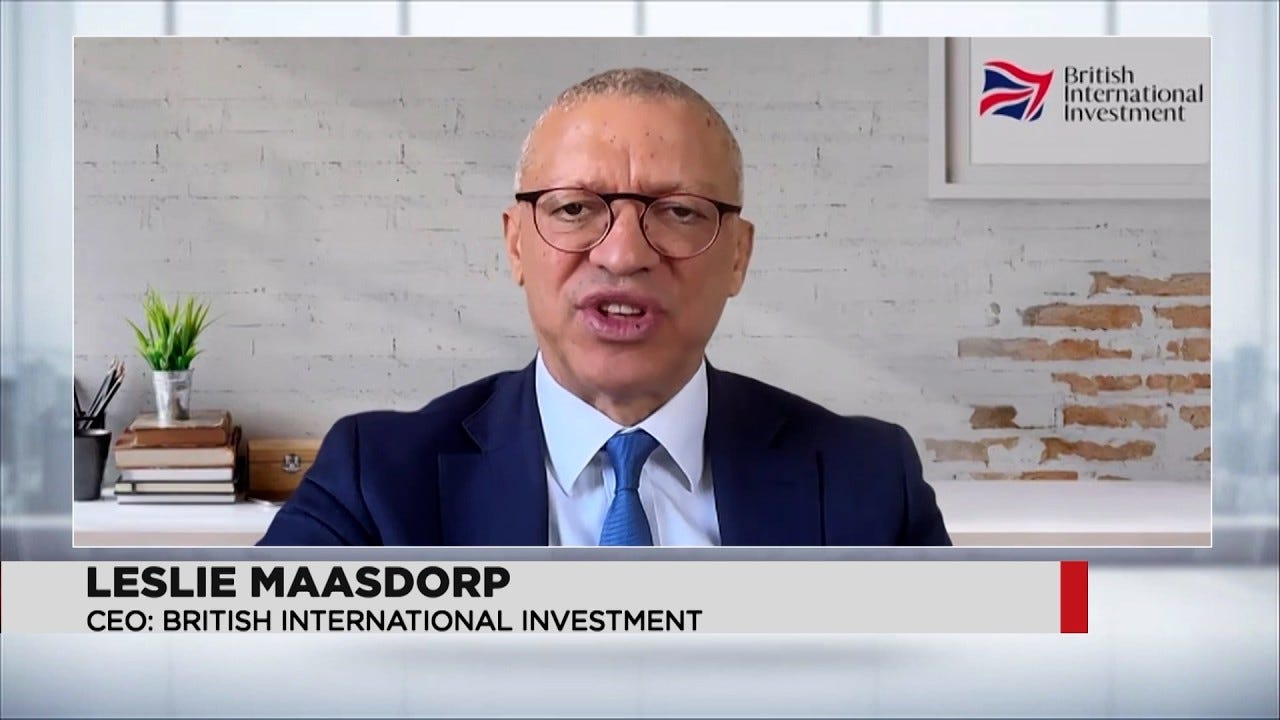
British International Investment has put about $590 million into 99 South African businesses that support about 40,000 jobs, Leslie Maasdorp said.
Critics say development lenders are too cautious and push private lenders out of deals. Maasdorp said BII's capital is too limited to fund South Africa's power, port and logistics needs, so its job is to take on risk that pension funds and insurers will not.
"We see ourselves as patient capital providers because we focus on development impact."
Leslie Maasdorp, CEO of British International Investment, on BusinessDayTV. BII is the UK's development finance institution, and he has run it since the end of 2024. In the late 1990s he was Deputy Director General and head of restructuring at South Africa's Department of Public Enterprises, working on the first plans to break up Eskom, the state power utility.
The full interview is covered here so you can skip it.
Here are the 5 lessons that matter.
Key Takeaways
Development lenders have limited capital, so BII now tries to bring in pension funds and insurers alongside it
BII takes first-loss positions so commercial investors are protected
He said it works almost like a guarantee
Private credit for mid-sized firms is an asset class BII wants to grow in South Africa
Eskom's split into separate generation and transmission companies was an idea two decades ago that has finally happened
Transnet needs private operators in its ports and rail to match the efficiency of Singapore and Hong Kong
1. Limited Capital
The anchor opened by saying state funding cannot pay for South Africa's plans to modernize the power grid, logistics and water systems, and that development finance institutions are there to bring in patient private capital. She said the subject will be taken up in more detail at the 13th Financial Times Africa Summit next month.
BII has invested in Africa for 78 years
"BII, British International Investment, have been an active investor throughout the African continent for the last 78 years." — Leslie Maasdorp
Maasdorp called South Africa a priority market for BII in Southern Africa because the region's power and port networks run through it.
"We have in South Africa alone raised something in the order of $590 million invested so far." — Leslie Maasdorp
He said the money is spread across 99 businesses that support about 40,000 jobs.
The next phase depends on other people's money
"In future, though, and this is a very critical point, we have limited capital as development finance institutions." — Leslie Maasdorp
He said BII now sees its role as reducing risk and building the financial structures that bring institutional investors in alongside it. South Africa needs large new investment in power generation, power transmission, ports and logistics, and he named the Public Investment Corporation (PIC), which manages South African public-sector pension money, together with insurance capital and pension funds, as the investors BII wants to bring in.
