

Bogumil Baranowski (Talking Billions Podcast)
With Michel Ingenbleek, investor and writer
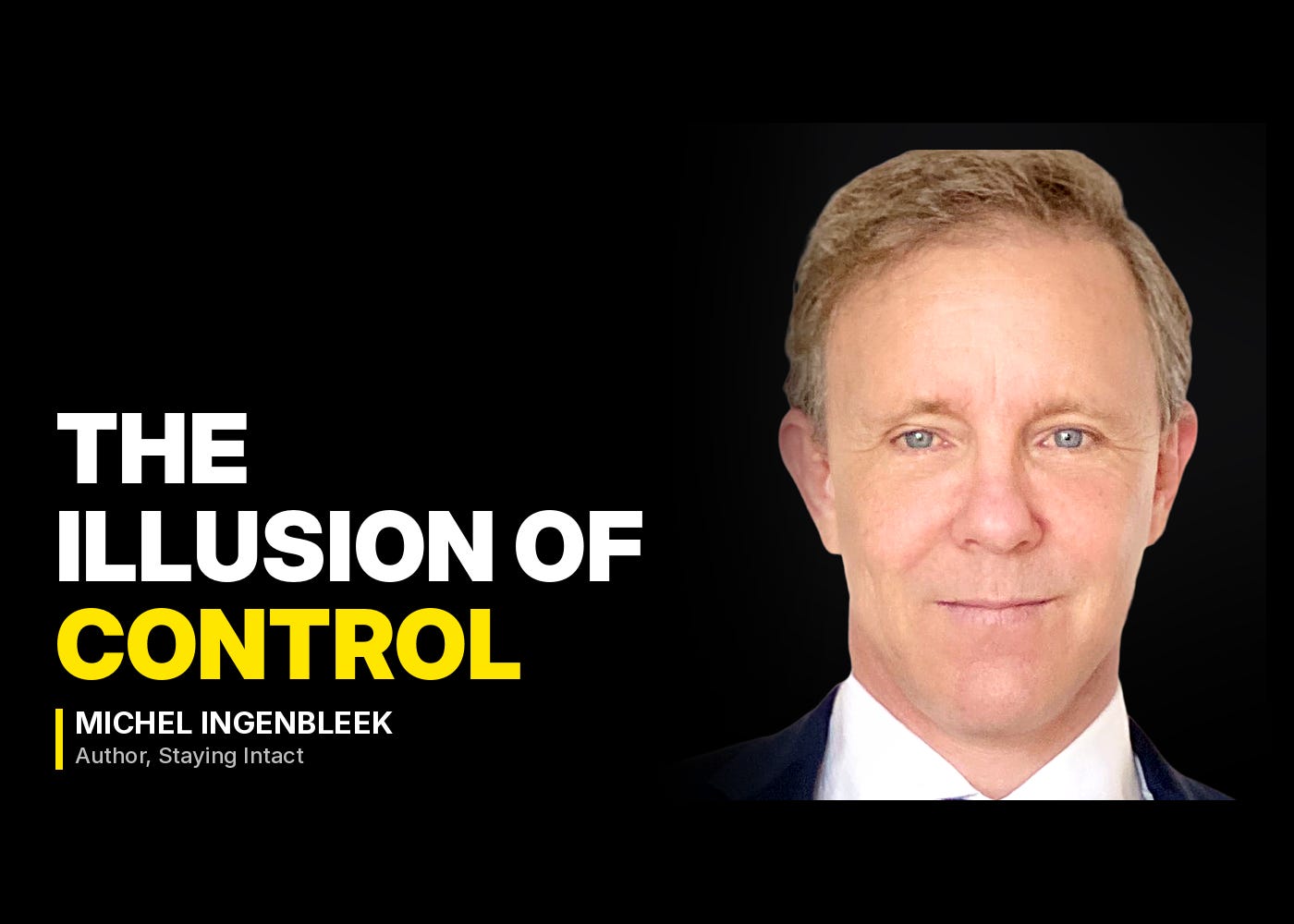
Photo via michelingenbleek.com
In 2022, Michel Ingenbleek sold both ASML and Nvidia. Both stocks went on to perform extremely well after he exited.
Most investors who get burned like that go looking for a better valuation model. Ingenbleek, a former commando and offshore hyperbaric welder turned investor and writer, decided the valuation model was never the problem.
"The decision was made before I started thinking, and no valuation method fixes that." — Michel Ingenbleek
Michel Ingenbleek, who writes the Capital and Character Substack and is the author of "Staying Intact: The Behavioral Discipline of Long-Term Investing," told host Bogumil Baranowski on the Talking Billions Podcast that the real risk in a position isn't the price you paid, it's whether you can actually hold it through the drawdown that comes first. Michel spent two decades running offshore energy projects and corporate strategy, after years as a commercial diver and hyperbaric welder working on pipelines roughly 100 meters down.
The full interview is covered here so you can skip it.
Here are the 8 lessons that matter.
Key Takeaways
The "behavioral margin of safety" is the gap between the stress a position will produce and the stress the investor can absorb
It's possible to buy at 50 cents on the dollar and still be wrecked if the position is too large
Selling ASML and Nvidia in 2022 taught him the decision gets made emotionally, before any analysis
He later caught himself reading analyst reports for confirmation, not for a test of his thesis
Writing a position down privately makes it easier, not harder, to change his mind
It "exposed something" before he could cling to it
Every bubble, from tulips to GameStop, starts with something genuinely true; the danger is treating a rising price as confirmation of the thesis
AI being real doesn't resolve whether current AI valuations are justified — that distinction held in every earlier bubble too
Narrative risk is loud and fast; economic risk is quiet and only shows up in the numbers over time
LTCM's own models assigned a near-zero probability to the scenario that actually happened
Sophisticated modeling can produce the illusion of control, not the reality of it
1. From Commando to Seabed
Ingenbleek describes an "ordinary," comfortable Dutch childhood where money was never discussed. He was drawn to the military after being coached by an ex-commando in competitive swimming, wanting the discipline and rarity of that path.
A photograph of welders on a pipeline sent him underwater
While in the Korps Commandotroepen, he became fascinated with diving after seeing a photo of welders working on a pipeline on the seabed. That curiosity moved him into the Marine Corps' amphibious unit, then out of the military entirely into commercial offshore diving — air diver, then saturation diver, then hyperbaric welder.
He recounts welding a 48-inch pipeline roughly 100 meters down inside a dry habitat, in a cold, dark helium-oxygen atmosphere, and realizing mid-career: is this something he wanted to do for the rest of his life? The answer was no, which pushed him toward engineering and corporate strategy, and eventually toward managing his own money rather than handing it to a wealth manager — a path he says began with "horrible mistakes."
