

Generating Alpha Podcast · Nov 22, 2026 · 17m · 11m saved
With Jeff Yass, Co-Founder of Susquehanna International Group
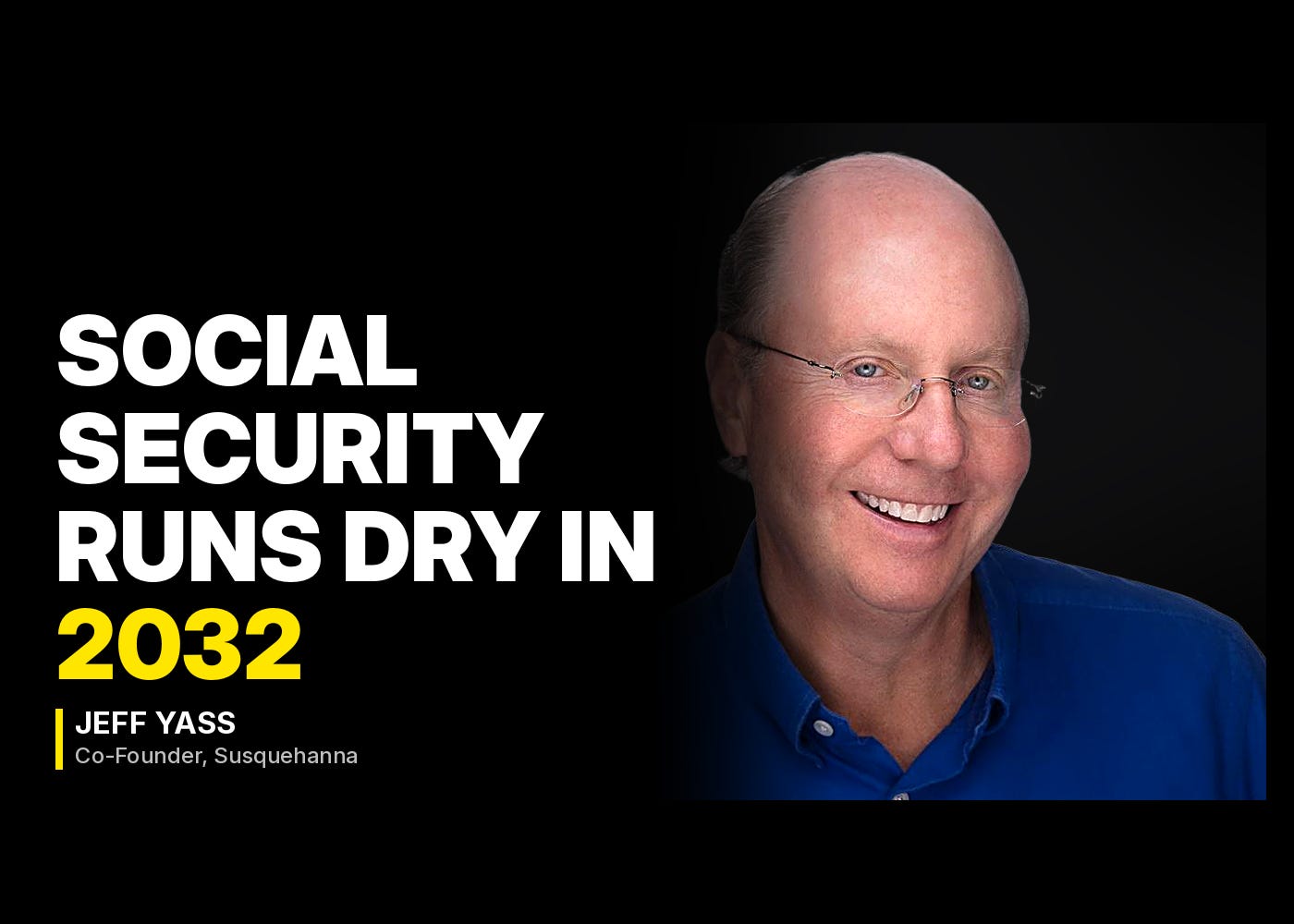
Photo via forbes.com
Social Security's trust fund is projected to run dry in 2032, and current law then cuts benefits to about 78% of what was promised, Jeff Yass, co-founder of Susquehanna International Group, told Amir Fischer on the Generating Alpha Podcast.
Most proposals to fix the gap raise taxes or trim benefits inside the existing system. Jeff wants to replace it, moving each worker's payroll tax into a private index-fund account the worker owns outright.
"The money you pay into Social Security, instead of going into government funds, would go into a private account with your name on it, invested in a zero-cost index fund — basically a Trump account." — Jeff Yass
Jeff, a co-founder of the trading firm Susquehanna, built his case on comparing decades of stock returns with what the government has promised to pay.
The full interview is covered here so you can skip it. 17 minutes of audio, 6 minutes of reading.
Here are the 8 arguments that matter.
Key Takeaways
The Social Security trust fund never held real assets, only the government's own IOUs
Under current law, benefits fall automatically to about 78% in 2032
Index fund fees are close to zero, which removes the old Wall Street objection
Jeff expects Congress to lift the payroll tax cap instead, which he calls a terrible idea
A retiree with $300,000 in benefits could have had well over a million under his plan
A guarantee against Treasury-bill returns, paid for by a tax on top earners, means no worker does worse than today
1. An Account in Your Name
Jeff defined privatization as moving payroll tax from the government into a named account. The worker would own the money at retirement and could pass it on as an inheritance.
Jeff Yass wants payroll taxes to go into private, zero-cost index funds owned by each worker
The account would work like a "Trump account," invested in a low-cost index fund. No such ownership exists today, which is the point of his next argument.
