

The Rollup · Oct 15, 2026 · 47m · 36m saved
With Dan Romero, Head of Go-To-Market at Tempo, co-founder of Farcaster
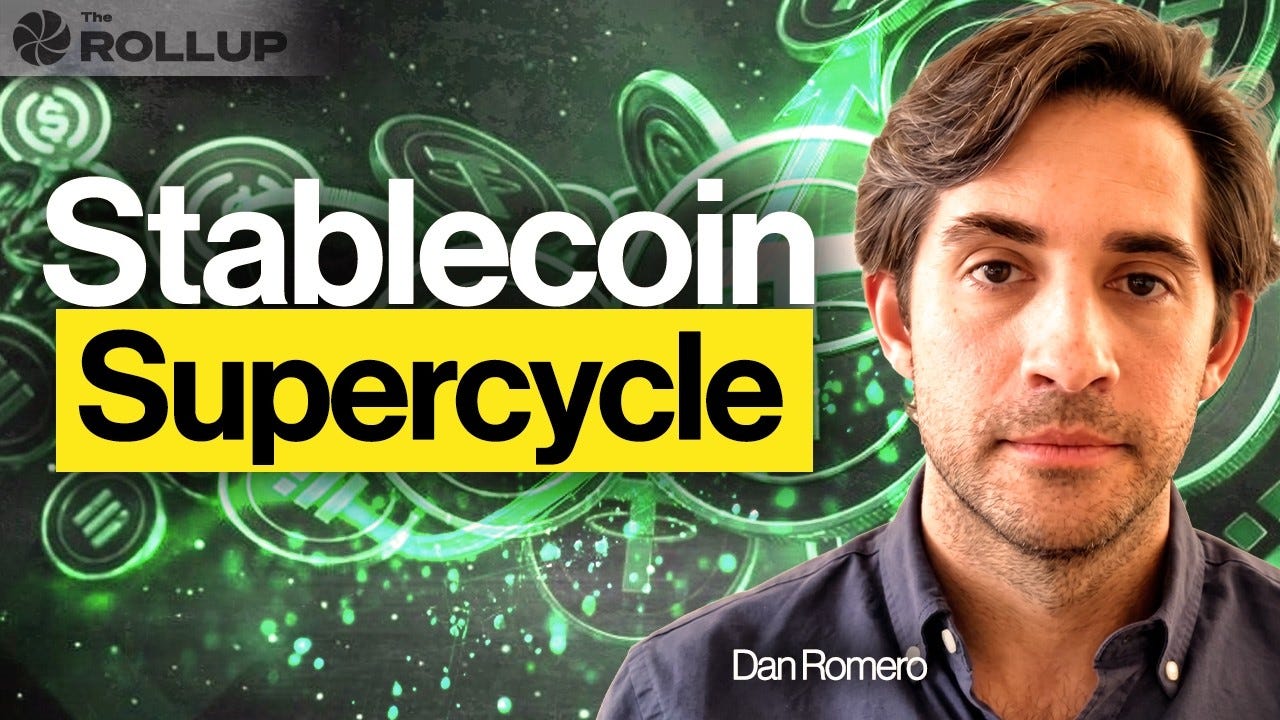
Dan Romero, Head of Go-To-Market at Tempo, told The Rollup podcast that every bank his team talks to is now building something with stablecoins, six months after Tempo's mainnet launch.
Banks have spent the year warning that dollar stablecoins will drain their deposits. Dan thinks that fear is overstated, and that the bigger shift is who is now willing to issue a stablecoin at all.
"It's actually imagination limited, really. The infrastructure is finally there — chains are really fast, coins are there, the smart wallets — those are all big unlocks. You have the regulatory clarity, so now you have much better connectivity into the fiat system." — Dan Romero
Dan spent five years at Coinbase in its early days, when exchanges struggled to keep a bank account, and five more building Farcaster, a decentralized social network. He now sells Tempo's payments chain to enterprises, neobanks and card networks.
The full interview is covered here so you can skip it. 47 minutes of audio, 11 minutes of reading.
Here are the 11 arguments that matter.
Key Takeaways
Dollar stablecoins extend the dollar's reach, because the coin people abroad want to hold is a dollar coin
The Genius Act widened stablecoins from a crypto-trading market to a global payments market
Visa, Mastercard and Stripe are now issuing or supporting coins they would not have touched before
Bank fears of deposit flight are overblown, in Dan's view, because money will go to the best product, bank or not
Enterprises balk at public blockchains, so Tempo built private zones that still reach its public liquidity
Decentralization comes from competition between chains, not from any single chain's design
If Tempo falls short, customers can swap to another stablecoin or bridge to another chain
Rebuilding Twitter on a decentralized network is a dead end, says the co-founder of Farcaster
Execution, not ideas, is now the bottleneck in crypto, with fast chains, smart wallets and AI coding tools in place
1. From Coinbase to Stablecoins
Dan has worked in crypto for more than a decade, split between Coinbase and Farcaster. He described the move to stablecoins as a relief after years of testing whether consumers wanted web3 products.
Dan Romero moved to stablecoins after a decade at Coinbase and Farcaster
"I've been in crypto for over a decade. Spent the first five years at Coinbase, spent five years on Farcaster. You might call that web3. And the shift to stable coins has been frankly refreshing after struggling to figure out if consumers are interested in web3." — Dan Romero
Stablecoins first proved useful for a crypto-native problem. Exchanges like the early Coinbase lacked reliable banking access, and a dollar token on a blockchain let them move money without it.
