

Unchained · Oct 20, 2026 · 1h 2m · 51m saved
With Alex Pruden, Co-Founder and CEO of Project Eleven · Conor Deegan, CTO of Project Eleven
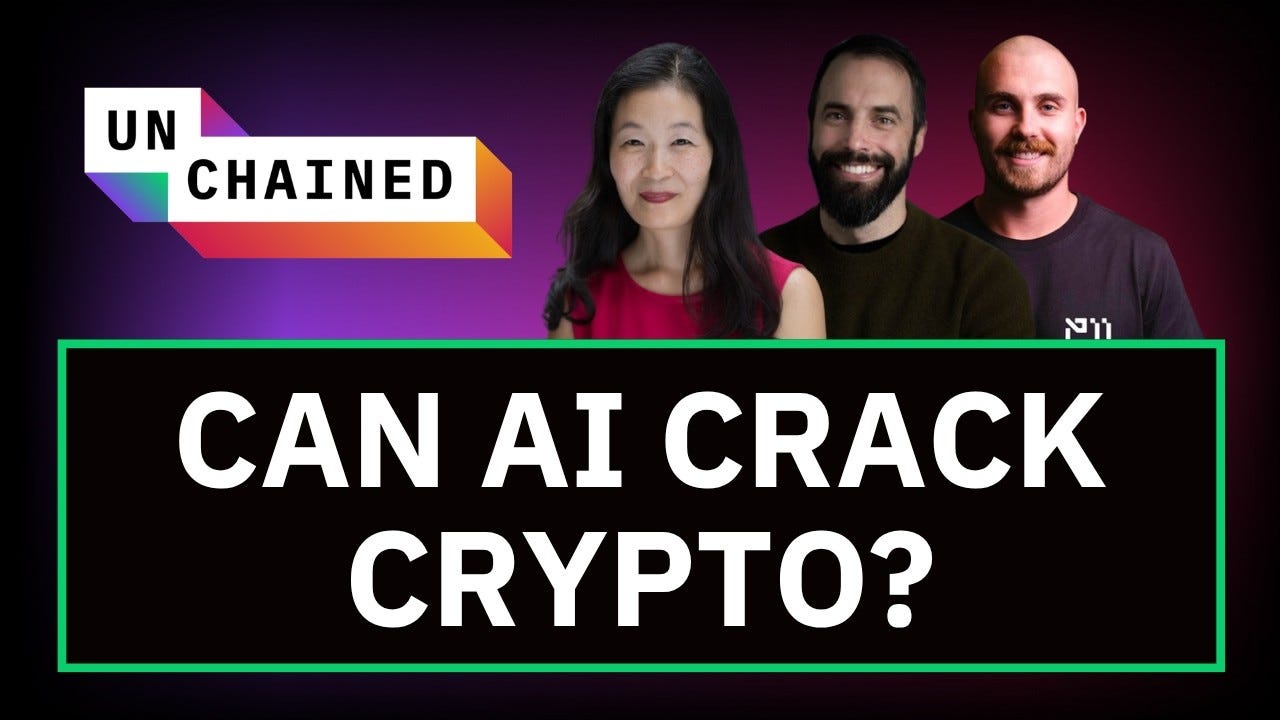
In the past two months, AI attacks have broken two post-quantum cryptographic schemes, one of them for about $100,000. Alex Pruden, co-founder and CEO of Project Eleven, and Conor Deegan, its CTO, told Laura Shin on Unchained that AI has become a second threat to crypto's cryptography, alongside quantum computing.
For years the industry has treated quantum computing as the threat to the math that secures wallets. Conor's point is that a quantum computer is still being built, while the AI systems probing the same math already exist.
"We know that elliptic curves will break. They will definitely break to quantum computing. It's just a matter of what date. AI is the reverse — we already have the machine that is attacking these curves. We just don't know if it will break them." — Conor Deegan
Alex and Conor build post-quantum security for crypto, and Project Eleven has just launched a custody platform designed to switch between cryptographic schemes as old ones fail.
The full episode is covered here so you can skip it. 1 hour 2 minutes of audio, 11 minutes of reading.
Here are the 11 takeaways that matter.
Key Takeaways
AI may threaten elliptic-curve cryptography before quantum computers do
No scheme used in production today is broken
AI attacks have already broken 2 post-quantum schemes that were not in production
One fell for about $100,000, according to Conor
Hash functions have been retired more often than elliptic curves, even though hashes look safer against AI
Alex's Q-Day forecast is 2030 at the earliest, more likely than not by 2033 to 2035
Moving to hash-based signatures solves the quantum and the AI problem together
Doing nothing is the real risk, in Alex's view, and chains that start migrating will win
Getting the migration started is 80% of the work, according to Conor
1. AI May Break Curves First
The episode started from Ethereum researcher Justin Drake's call for crypto to prepare a "bunker mode": a controlled move of assets to addresses whose public keys stay hidden behind a hash. His worry is that AI, and not only quantum computers, may soon be good enough at math to break the elliptic-curve cryptography that blockchains rely on.
Alex said the post reflects two things at once: real progress in quantum computing, and frontier AI labs, OpenAI among them, publishing large batches of new math results. None of those results is about cryptography, but they have unsettled cryptographers, including Johns Hopkins' Matthew Green, who warned of a "small chance" the field could lose public-key cryptography in general.
Conor Deegan says the machine that might break elliptic curves already exists
"We know that elliptic curves will break. They will definitely break to quantum computing. It's just a matter of what date. AI is the reverse — we already have the machine that is attacking these curves. We just don't know if it will break them." — Conor Deegan
Quantum is a question of when the hardware arrives. AI is a question of whether existing systems find a way in, and nobody can yet say.
