

Long Strange Trip: CEO to CEO with Brian Halligan · Oct 29, 2026 · 1h 1m · 56m saved
With Chase Lochmiller, CEO and Co-founder, Crusoe
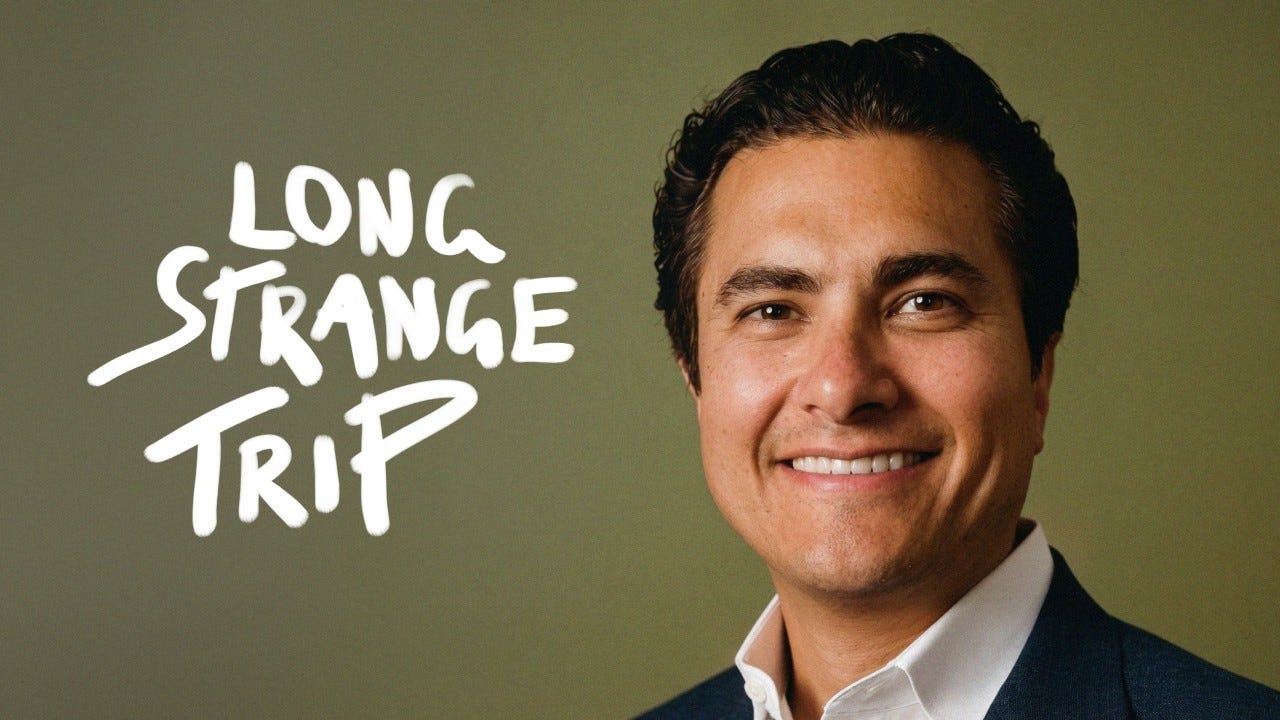
Chase Lochmiller, CEO and co-founder of Crusoe, told Sequoia Capital's Brian Halligan on Long Strange Trip that selling off Crusoe's Bitcoin mining business was never a pivot — it was the plan all along. Crusoe has closed a financing round at a $31 billion valuation building what Chase calls an "AI supermajor," vertically integrated the way Exxon and Chevron are integrated across oil and gas.
"I think externally a lot of people thought this was a pivot for us, but internally... this was sort of the plan all along. This energy-first approach to computing." — Chase Lochmiller
Chase built Crusoe on the idea that compute is ultimately an energy problem, starting from gas flared as waste at oil wellheads and running through Bitcoin mining on the way to AI.
The full interview is covered here so you can skip it. 1 hour 1 minute of audio, 5 minutes of reading.
Here are the 4 takeaways that matter.
This Scuttlebutt Summary is available in full to premium subscribers. If you're not one already, please consider subscribing to keep reading.
Key Takeaways
Crusoe is modeled on oil majors like Exxon, not a cloud provider
It covers energy generation, data-center construction, equipment manufacturing and a managed AI cloud layer
Selling Crusoe's Bitcoin business wasn't a pivot — it was always the plan
The original thesis: if compute is AI's bottleneck, compute becomes an energy problem
Bitcoin mining and AI power loads are complementary, not just sequential
Bitcoin draws a roughly fixed power level; AI workloads vary, which is useful for grid balancing
Chase deeply trusts only three or four people across major initiatives
He holds them accountable after aligning on direction, rather than managing hands-off
1. An "AI Supermajor"
Chase framed Crusoe's vertically integrated model — energy generation and power-plant construction, gigawatt-scale data-center buildout, equipment manufacturing, and a managed AI cloud layer on top — explicitly on the oil majors' upstream, midstream and downstream structure.
Crusoe copies Exxon's internal hedge: when one margin compresses, another expands
"Exxon very famously doesn't hedge their oil exposure, because when oil prices come down, their upstream business... those margins actually get compressed, but their downstream business, at the refinery, those margins actually expand." — Chase Lochmiller
He said Crusoe operates with the same logic and the same willingness to partner with companies that look like competitors elsewhere in the stack, "because there's so many more ways for us to help each other than for us to work against each other." Crusoe has closed a financing round at a $31 billion valuation.
