

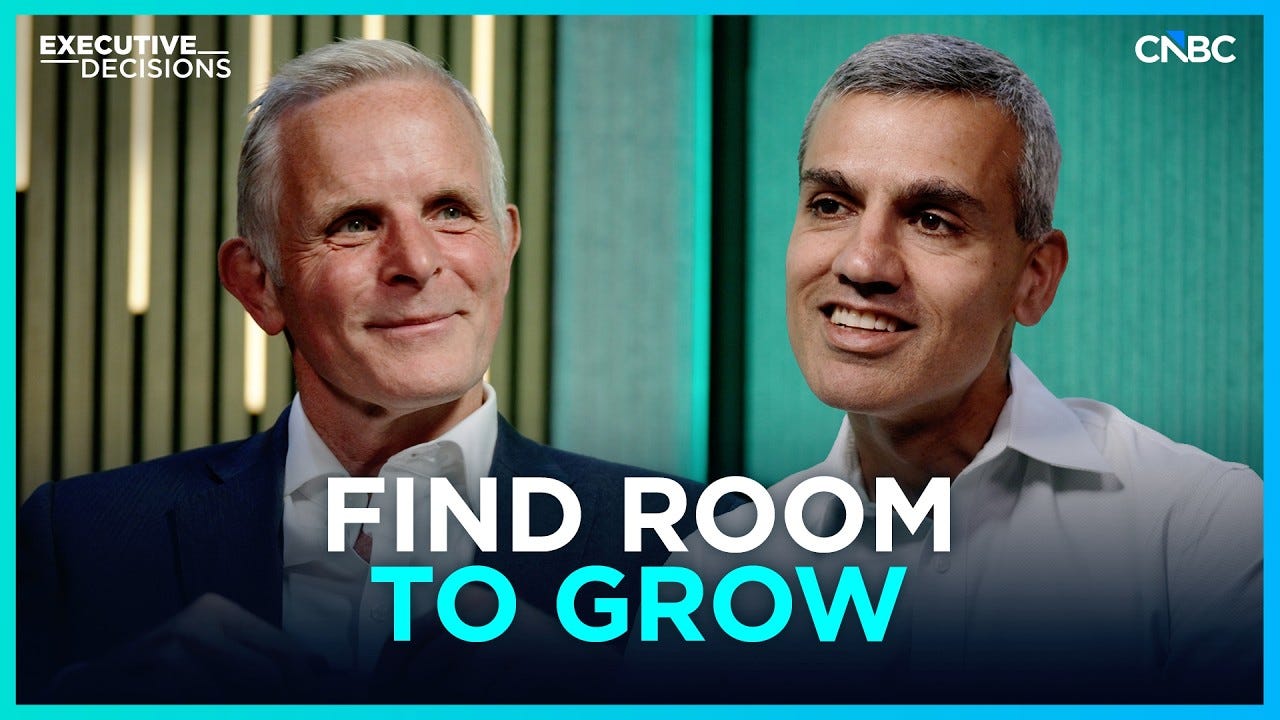
Kunal Kapoor, CEO of Morningstar, told Steve Sedgwick on CNBC's Executive Decisions that he joined the firm in 1997, when it had about 200 people and less than $30 million in revenue.
Everyone close to him, his parents included, wanted him to take a higher-paying banking offer instead. Nearly three decades on, he is the only guest in 25 to 30 Executive Decisions interviews to have stayed at one company that long.
"I had another higher paid offer and everybody close to me thought I should take that job, including my parents... I just trusted my gut."
Kunal has spent 29 years at Morningstar. His first major decision as CEO was the PitchBook purchase, the most the firm had ever spent on a deal, and he now calls helping colleagues and customers adapt to AI the biggest challenge of his career.
The full interview is covered here so you can skip it. 36 minutes of audio, 7 minutes of reading.
Here are the 8 lessons that matter.
Executive Decisions with Steve Sedgwick · Oct 26, 2026 · 36m · 29m saved
With Kunal Kapoor, CEO of Morningstar
Key Takeaways
Kunal turned down a higher-paid banking offer in 1997 to join a firm of about 200 people
The PitchBook deal turned Morningstar into a data business, after someone told Kunal the LinkedIn deal was "about the data"
DBRS in credit ratings and Sustainalytics in ESG research followed
Outside "superstar" hires with a "hero mentality" were his biggest mistakes, and the culture pushed them out
AI is "remaking everything" at Morningstar, and Kunal says the firm does not have all the answers
Human judgment and relationships are the part of the business AI is not changing
Morningstar's HR team built an AI agent to mimic Kunal, and so far it cannot predict him
1. Childhood Taught Him Numbers
Kunal traces his interest in numbers to Calcutta, now Kolkata, where he studied the horse-racing form sheets his father brought home.
Kunal's first lessons in markets came from India in the 1990s, including the Harshad Mehta scandal
His father sent him to boarding school in Darjeeling from age five, for the independence it would build. Kunal said it was difficult at first but shaped him. The Indian markets of the 1990s taught him that outcomes often differ from expectations, and that investing against the crowd beats chasing trends.
