

Odd Lots · Oct 20, 2026 · 30m · 23m saved
With Terry Duffy, Chairman and CEO of CME Group
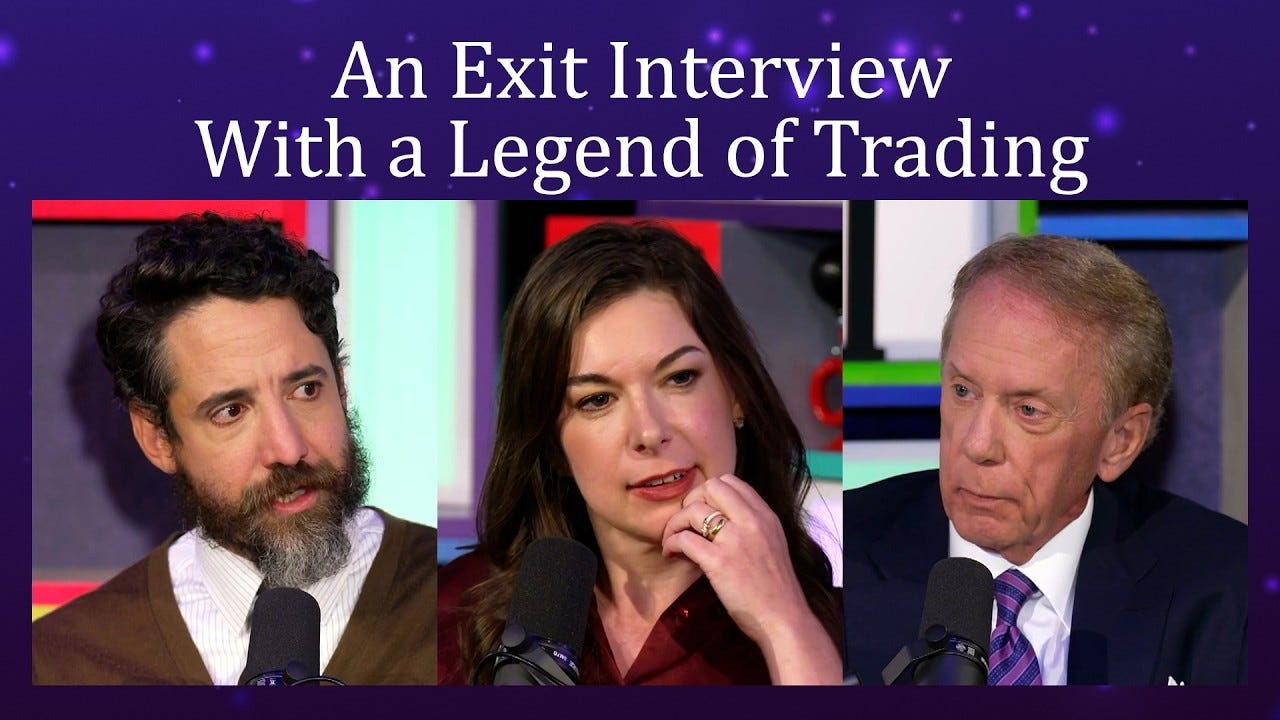
Terry Duffy started at CME in 1980 for $56 a week. Most executives mark a long tenure by what they built. On the eve of stepping back as CEO, Terry told Tracy Alloway and Joe Weisenthal on Odd Lots that what worries him now is what regulators have stopped doing.
"Since the second Trump administration's come into place, there's been 2,500 self-certifications that have been submitted into the Commodity Futures Trading Commission. Not one of them has been denied."
Terry is moving from CEO to executive chairman of CME Group next year, handing the role to Lynn Fitzpatrick, and the conversation — recorded live at City Winery in Chicago as a kind of exit interview — covers nearly five decades of watching how finance gets regulated.
The full interview is covered here so you can skip it. 30 minutes of audio, 7 minutes of reading.
Here are the 4 takeaways that matter.
Key Takeaways
The CFTC has approved every one of 2,500 self-certifications since the second Trump administration began, which Terry calls a "ready fire aim strategy"
He says perpetual futures are mislabeled swaps, not a product innovation — futures get 1256 tax treatment, while swaps are taxed as ordinary income
Hyperliquid's lack of KYC violates the market-access principle he says the US requires; he names trade[XYZ] as doing 98% of its volume
24/7 equity trading is "inevitable," but nobody can pre-fund a $76 trillion market over a weekend while banks are closed
He calls April 2020's negative oil price scarier than the 2008 crisis, defending a market with no storage demand left
1. A "Ready Fire Aim" Regulator
Terry traced CFTC oversight back to its 1972-73 founding as a principles-based agricultural regulator, through Dodd-Frank, which he said the industry is "still trying to figure out parts of" sixteen years on.
The CFTC has denied none of 2,500 self-certifications since the second Trump administration began
"Since the second Trump administration's come into place, there's been 2,500 self-certifications that have been submitted into the Commodity Futures Trading Commission. Not one of them has been denied." — Terry Duffy
He pointed to Kalshi's hot-dog-eating-contest prediction market as an example he believes violates Core Principle 3, the rule against contracts susceptible to manipulation.
A contract with no clear economic purpose still got approved
"They approved a contract on predictions on Nathan's hot dogs... what's the economic impact of that contract being out there?" — Terry Duffy
Rules made by agency fiat rather than by statute are reversible "by a wipe of a pen" whenever administrations change, he said, which is why he'd rather see Congress write them.
