

Masters of Scale · Nov 3, 2026 · 31m · 24m saved
With DJ Patil, Former US Chief Data Scientist, of Warp Sciences · Raina Kumra Gardiner, CEO of Spicewell · Hayden Brown, CEO of Upwork · Baratunde Thurston, Creator of Life With Machines · John Mills, CEO of Watch Duty · Dara Treseder, CMO of Autodesk · William Treseder, COO of Arkenstone
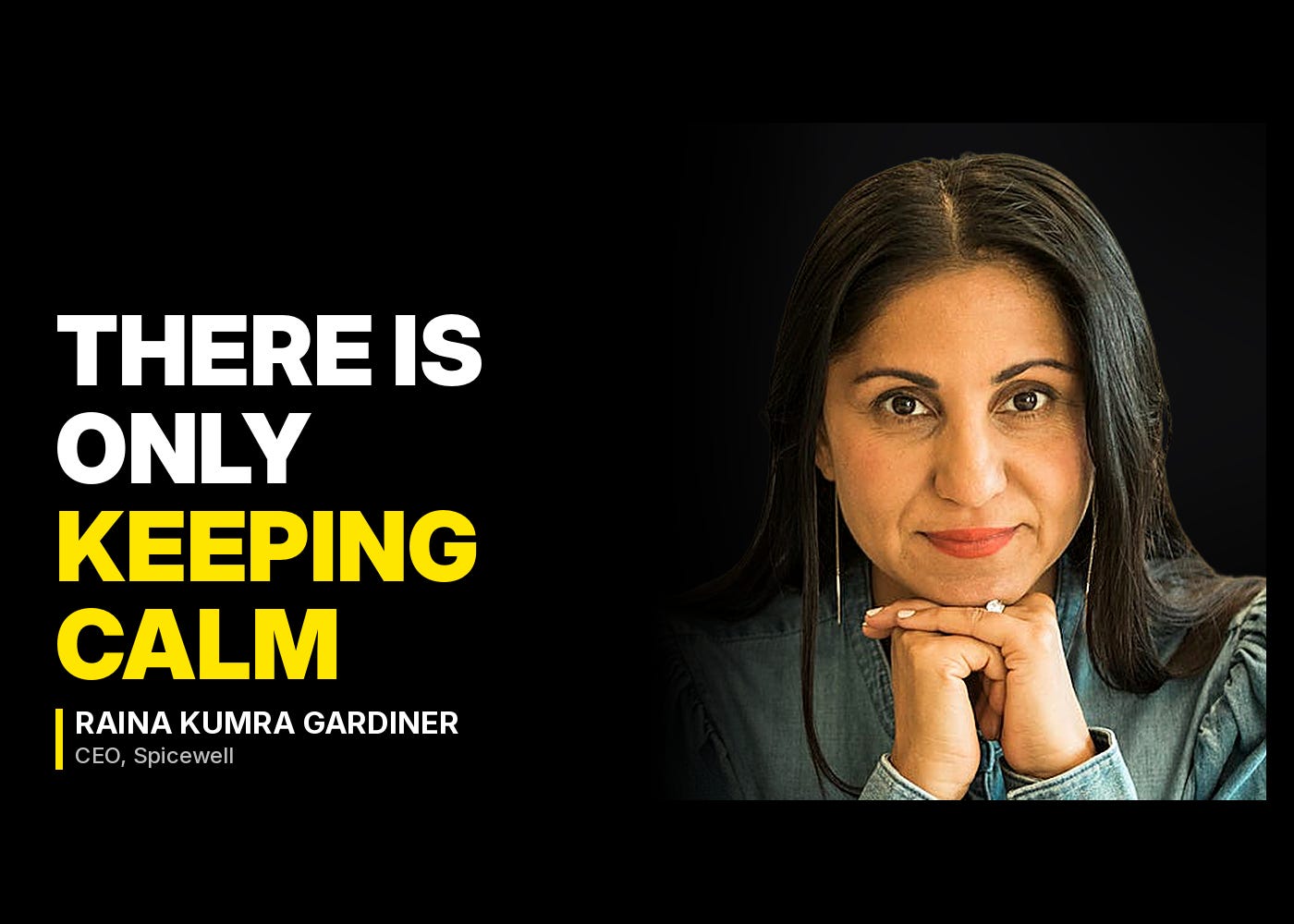
Photo via Medium (Authority Magazine)
Raina Kumra Gardiner, CEO of Spicewell, told Bob Safian on Masters of Scale that she stopped trying to learn every new AI tool and built a team of 12 AI agents instead. Most of the leaders at the Masters of Scale Summit described working harder to keep pace with change. Raina's answer was to stop chasing it.
"There is no keeping up. There is only keeping calm. So you're not that far behind." — Raina Kumra Gardiner
Raina advises Google X as well as running Spicewell. She shared the summit recording with the heads of Upwork and Watch Duty, Autodesk's marketing chief, a former US chief data scientist and a defense-tech operator, each with a rule for deciding what to protect when everything moves at once.
The full episode is covered here so you can skip it. 31 minutes of audio, 7 minutes of reading.
Here are the 6 lessons that matter.
Key Takeaways
Leaders should ask how far ahead they can forecast, not how chaotic things are
Raina Kumra Gardiner replaced her AI learning routine with 12 AI agents
Some are better at math than she is, and some have "the judgment of a toddler"
Upwork dropped fixed quarterly plans for a pioneer mindset that re-measures progress daily
Its internal Crystal Ball tool turns weeks-long analyst projects into hours of work
Watch Duty keeps people reviewing AI-flagged fire alerts, accepting minutes instead of seconds
Technology that replaces relationships instead of serving them costs something, Baratunde Thurston says
Autodesk's CMO and her husband run their family on KPIs and a "marriage NPS"
1. Ask About Forecast Range
Bob Safian, who hosts Rapid Response in the Masters of Scale network, opened by bringing back "Generation Flux," a concept from his years at Fast Company. DJ Patil, the former US Chief Data Scientist, brought a double pendulum built in the lab of Jim Yorke, the mathematician who coined the term "chaos theory."
DJ Patil used a double pendulum to show how small starting changes compound
"This is the idea that a small change leads to giant changes later. This is sometimes called the butterfly effect." — DJ Patil
A tiny change in where the pendulum starts produces a very different path. DJ's point for leaders was that chaos is a matter of degree, and that the useful question is how far ahead a situation can be predicted.
DJ Patil says leaders should measure how far ahead they can predict
"The question isn't always, how chaotic is it? It's: How much forecast range do I have?" — DJ Patil
He compared it to weather. A forecast can hold for weeks in a calm period and fail a few hours out in a volatile one. The skill, he said, is knowing which situations can be controlled and which cannot, a lesson he credited to a tank commander after 9/11: "Out of chaos comes opportunity."
