

All-In · Sep 30, 2026 · 21m · 10m saved
With Jake Paul, Co-founder and Managing Partner of Anti Fund and Founder of Most Valuable Promotions
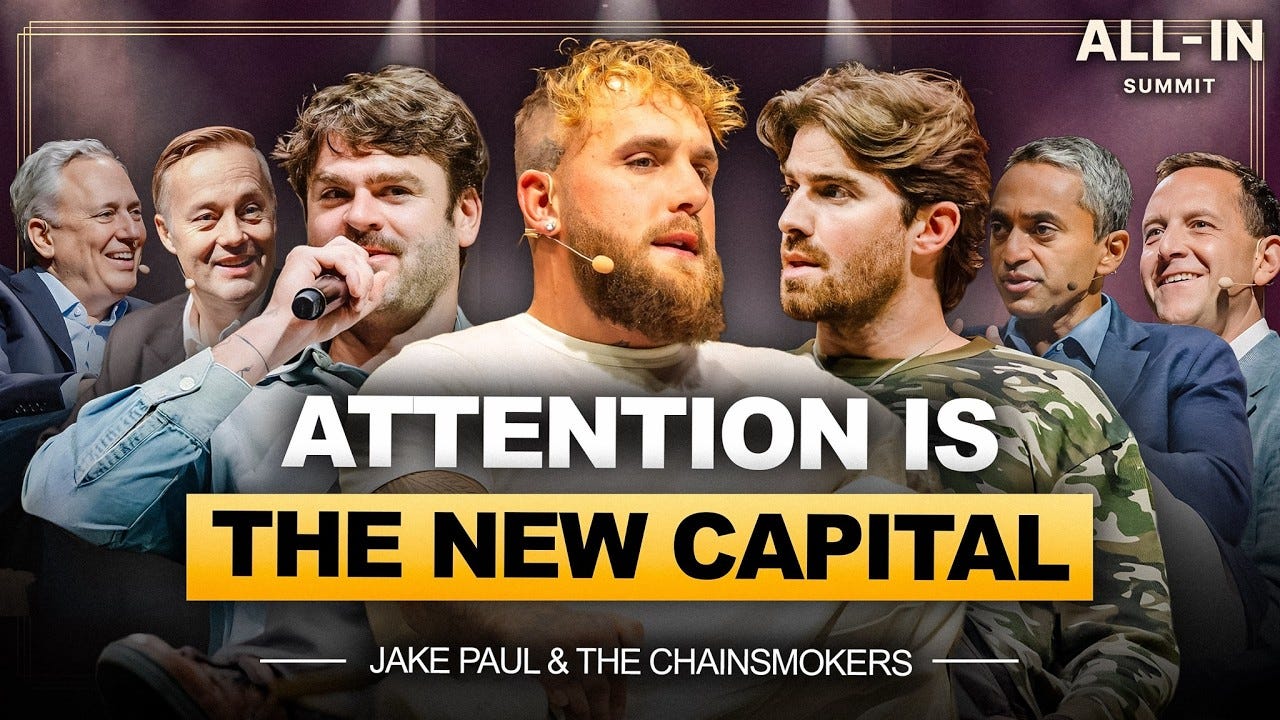
The UFC pays its fighters roughly 15% of its revenue, Jake Paul said, against 50% in other professional sports leagues. His boxing and MMA promoter now has 400 fighters and has just merged with the PFL to go after it.
The host laid out the usual path for a creator: content, then sponsorships, then a product line, and only then ownership of assets. Paul skipped most of it. He was angel investing at 18, ran a creator label before his YouTube channel took off, and now wants his venture fund compared with Sequoia on returns rather than filed under celebrity money.
"Like if a lawyer is an investor, they don't call him a lawyer investor."
Jake Paul, co-founder and managing partner of Anti Fund and founder of Most Valuable Promotions, on All-In, spoke on stage at the All-In Summit. His fight with Mike Tyson drew what he put at 138 million viewers on Netflix, and the host listed OpenAI, Cognition and SpaceX among his fund's holdings.
The full interview is covered here so you can skip it. 21 minutes of audio, 11 minutes of reading.
Here are the 8 moments that matter.
Key Takeaways
The UFC pays fighters about 15% of revenue, Paul said, against 50% in other leagues, and that is the opening for his company
MVP has 400 boxing and MMA fighters and has merged with the PFL
The top 20 Vine stars asked for $1M each a year, were refused, left, and the app was dead within months
He said he told OpenAI to launch a social app for Sora and licensed his likeness for it
His fund's pitch is that capital is a commodity and attention is not
He wants Anti Fund compared with Sequoia on DPI and IRR, not grouped with celebrity investors
A barbell strategy: first checks into new founders, and growth rounds in proven companies
No single platform can fix clickbait on its own, he said, because viewers would move to a rival
At 40 he sees himself in politics, and he expects future officeholders to arrive with their own audiences
1. The Vine Walkout
The host opened with how Paul grew up inside social media, starting on Vine before TikTok existed.
Authentic creators are the ones who last
Paul said he could not remember a time when people were not following him, and that he started before it was fashionable, because he loved making things. Many people now try to become influencers because it looks like the best career on offer, he said.
"But I think the people that authentically are actually entertaining and have a take and are filling a niche in the entertainment space and specifically on social media are the ones that succeed." — Jake Paul
He said his daily vlogs told viewers to work hard, smile and chase their dreams, and that those simple reminders were why the audience grew.
The top 20 stars asked to be paid, and the platform died
Asked what happened when Vine disappeared from under him, Paul said he was not worried, and called it a lesson for business owners. The top 20 Vine creators told the company it had to start paying them or they would stop posting.
"We were bringing in all of the content, all of the views, all of the fans." — Jake Paul
Vine, by then owned by Twitter, offered $1M to split among the 20. The creators said "No, we need a million dollars each per year." Vine refused, and they moved to Facebook, YouTube and Snapchat.
"And within a couple of months, the Vine died out." — Jake Paul
