

a16z · Oct 19, 2026 · 1h 3m · 54m saved
With Jean-Denis Greze, Co-Founder and CEO of Town, previously CTO of Plaid
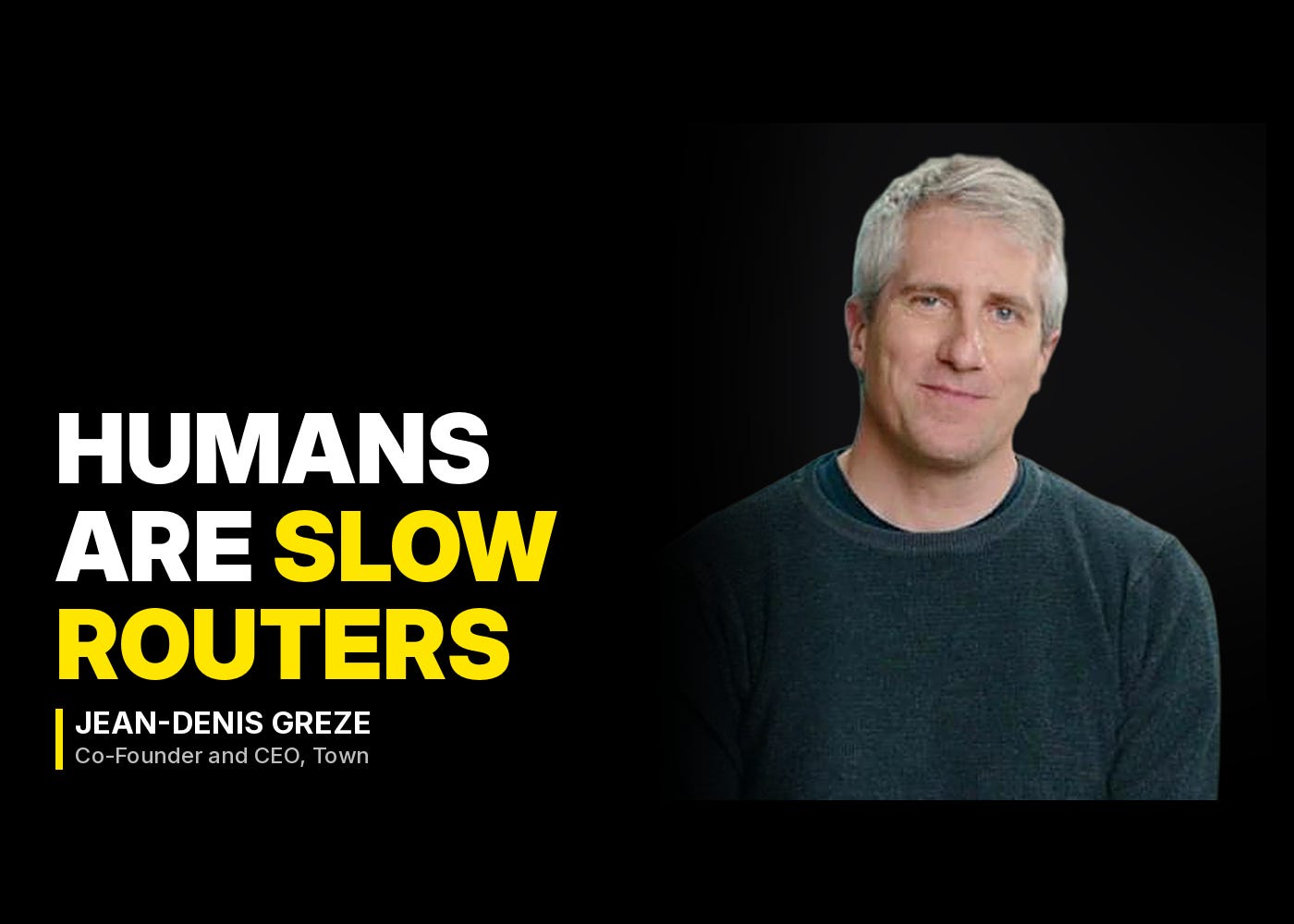
Photo via fortune.com
Jean-Denis Greze, co-founder and CEO of Town, told Alex Rampell on the a16z podcast that he shut down his first startup after Plaid even though it was on track for $2.5 million to $3 million of revenue in its second year.
Most founders keep a business that is growing and paying its way. Jean-Denis killed an AI tax-preparation company for small and mid-size businesses because he could not see how it would reach millions of customers, and moved his team to an AI assistant that works out of email and calendar.
"This was not going to be a venture-scale company." — Jean-Denis Greze
Jean-Denis ran engineering at Plaid as its CTO before starting over, and Town has since become a company Ben Horowitz told his own partner had changed his life.
The full interview is covered here so you can skip it. 63 minutes of audio, 9 minutes of reading.
Here are the 10 lessons that matter.
Key Takeaways
Jean-Denis shut a tax startup on track for $2.5M–$3M in year two because tax is sold once a year
Town grew out of one question: why no one had built a great AI that works out of email and calendar
Ben Horowitz told Alex Rampell that Town "changed my life" without knowing a16z had backed it
Forward-deployed engineers look good today and get worse as models improve, in Jean-Denis's view
Town routes to whichever AI lab is best at the moment and refuses to train on customer data
Supply aggregation is worth less once human attention can be automated, Jean-Denis said
His advice to Amazon is to build its own personal agent rather than block others
1. A Profitable Startup, Shut
Jean-Denis's first company after Plaid used AI to prepare taxes for small and mid-size businesses. Year-one revenue was under $1 million and year two was tracking toward $2.5 million to $3 million. He still closed it after a year.
Jean-Denis Greze believed tax prep would be automated but doubted he could sell it at scale
"Even though I have no doubt that tax prep will be automated, how do you reach millions of businesses efficiently and sell that product? That had a lot more question marks than we anticipated." — Jean-Denis Greze
The product was not the problem. He thought automating business tax prep with AI was technically achievable within two years. The trouble was go-to-market: incumbents with distribution could copy the automation before a new entrant reached scale.
Tax has no daily habit, which leaves a startup little word of mouth to grow on
"Tax is also sold once a year... those discontinuities make it really difficult to hyper-scale." — Jean-Denis Greze
