

Decoder with Nilay Patel · Nov 9, 2026 · 1h 14m · 64m saved
With Mitch Glazier, Chairman and CEO of the RIAA
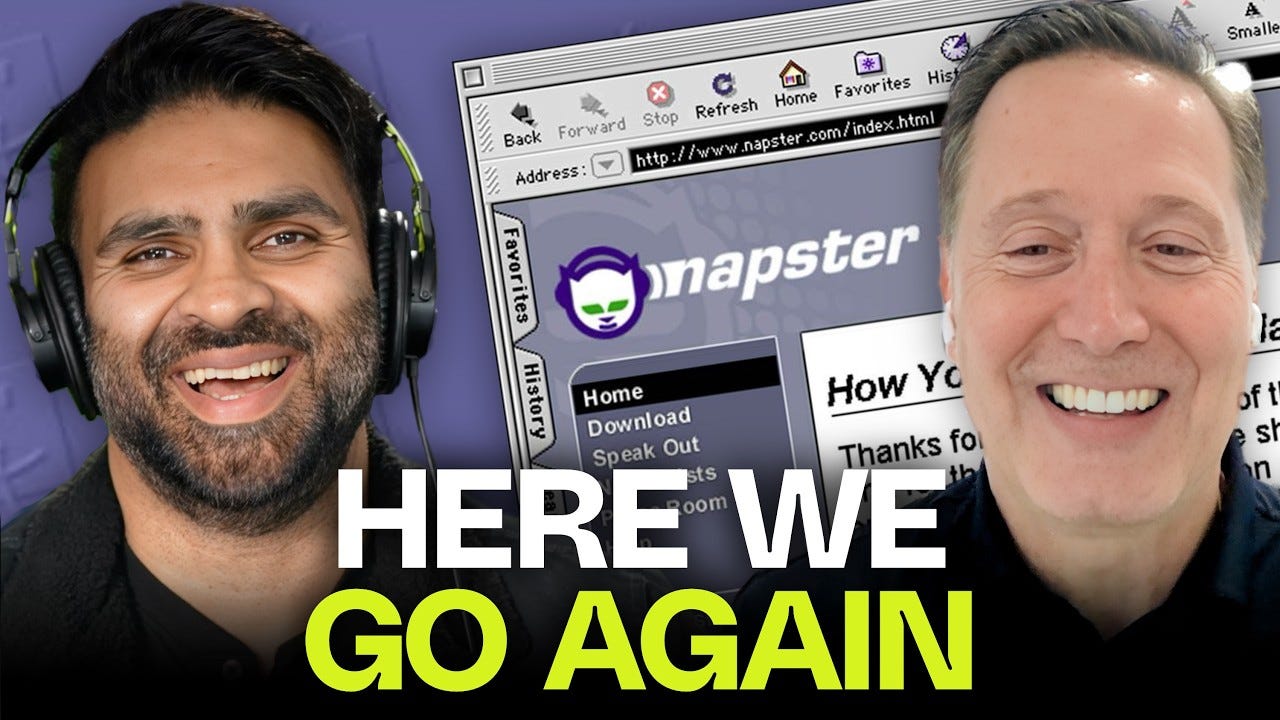
The entire US recorded-music business took in $11 billion wholesale last year, and a single AI company carries a $2 trillion market value. Mitch Glazier, chairman and CEO of the Recording Industry Association of America, made that comparison on Decoder with Nilay Patel to explain how small his side of the AI fight is. In the Napster era, the RIAA, the labels, the artists and the fans were on opposite sides. Now Mitch says all of them are pulling against the big AI companies, which train on everyone's work without permission.
"This industry's adapted more times than any other industry in the history of our country. I mean, nobody goes from wax cylinders to AI in a hundred years." — Mitch Glazier
Mitch was the young RIAA lawyer who pursued college students over Napster and Kazaa, and he now runs the organization as it sues the AI music company Suno.
The full interview is covered here so you can skip it. 1 hour 14 minutes of audio, 10 minutes of reading.
Here are the 12 arguments that matter.
Key Takeaways
The RIAA has 46 staff and a three-person lobbying team, against $250M of super PAC money in one midterm cycle
No one has a federal right to their own voice or likeness, which the NO FAKES Act is meant to change
YouTube licenses music because it learned you can win the case but lose the business
The Suno lawsuit argues that AI music substitutes for human music on the same platforms at the same price
Mitch expects labeling to decide the market, with fans choosing human artists once they can tell
Distributors like DistroKid and TuneCore, not labels or streaming services, are where AI tracks could be flagged
Some chart bodies already require tracks to be substantially human
1. From Napster to Suno
Nilay Patel, editor-in-chief of The Verge, opened on a personal irony. Napster set his own career in motion, and Mitch was on the other side of it.
Nilay Patel says a Napster ban made him want to be a copyright lawyer
"My entire career got on track when I was in college. Napster came out, my university banned Napster from the school network, and I decided right then I was going to go be a copyright lawyer." — Nilay Patel
Mitch was then the RIAA lawyer whose work sent Napster- and Kazaa-era college students to settle lawsuits for a few thousand dollars each. He also toured campuses to make the RIAA's case and met open hostility.
Mitch Glazier once walked onstage at a college with a garbage bag over his head
"So I took a garbage bag, put it over my head, and I walked out onto the stage, thinking they were going to throw tomatoes at me; I might as well make light of it." — Mitch Glazier
