

Founder's Story · Nov 27, 2026 · 30m · 21m saved
With Michael Amori, CEO and Co-Founder of Virtualitics
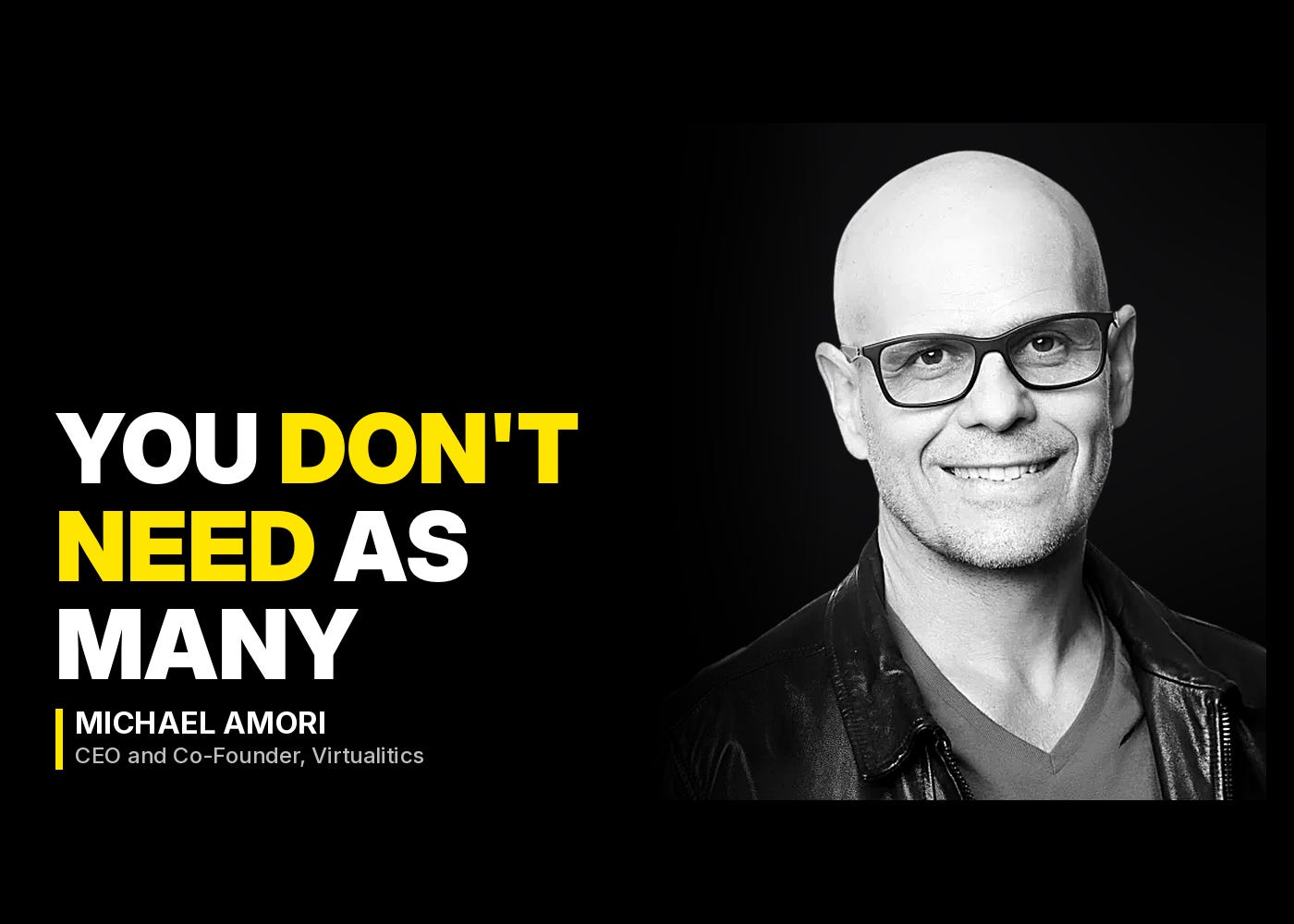
Photo via virtualitics.com
Michael Amori, CEO and co-founder of Virtualitics, told Daniel Robbins on Founder's Story that the plain-vanilla software engineer is the first kind of engineer AI makes less necessary. Caltech students are already moving out of computer science and into mechanical and electrical engineering to build robots.
Most AI companies are chasing smarter models. Michael argues the companies that survive the next decade will be the ones that supply better context, and he admits his own company spent years solving the right problem the wrong way.
"When you start a company, you're a little bit delusional, otherwise you wouldn't start the company." — Michael Amori
Michael holds a master's in applied physics from Caltech, ran a data-driven trading desk for Deutsche Bank across London, New York and India, and now sells AI analytics to the US military for readiness and logistics.
The full interview is covered here so you can skip it. 30 minutes of audio, 9 minutes of reading.
Here are the 11 lessons that matter.
Key Takeaways
Better context, not a smarter model, will decide which AI companies survive the next decade
Caltech students are leaving computer science for mechanical and electrical engineering as robotics becomes the next big thing
Fewer plain software engineers will be needed, while humanities, psychology and philosophy gain value
Michael thinks people who trained specifically as prompt engineers probably made a mistake
Virtualitics kept a VR data-visualization product years past the point it should have pivoted
A military contract wanted only the machine-learning layer underneath it
Technical founders underweight selling and communicating, and Michael lists it among his two costliest lessons
AI built his swim training plan and helped him drop "about two and a half seconds" in the 50-meter freestyle
1. Context Beats Smarter Models
The AI companies still standing in ten years, Michael told Daniel, will be the ones that manage context better than anyone else.
Michael says AI's value depends on the context fed to it
"It will be the companies that are able to manage the context better than everyone else... AI is an amazing tool, but without the proper context, it does not add the kind of value that we think it can create." — Michael Amori
His example comes from Virtualitics' own work. The company helps the military improve readiness by pulling in logistics data, and a generic model wired straight to that data gives poor answers.
A generic LLM on raw military data produces hallucinations, Michael says
"You can't just connect to a generic LLM and expect that it will give you the right answers. You need the LLM together with the right kind of context... otherwise you might get hallucinations." — Michael Amori
His fix is agents whose job is to hand the model the right context. Many AI companies, in his view, have it backwards: they spend on smarter models instead of better context.
