

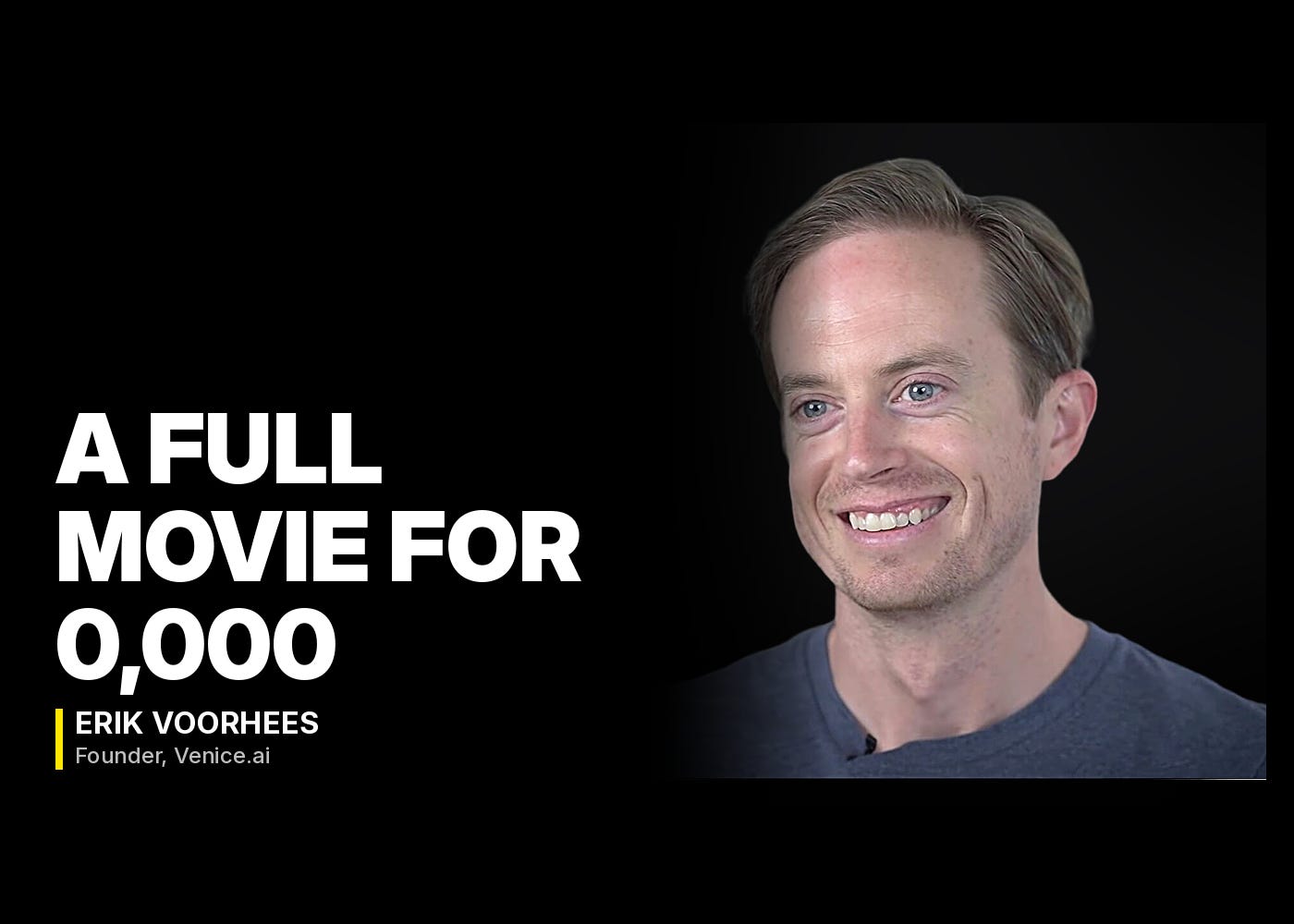
Photo: ReasonTV, CC BY 3.0 via Wikimedia Commons
Venice.ai's video-generation tools, added without much fanfare about a year ago, now account for roughly 30% of all activity on the platform.
Erik Voorhees, founder of Venice.ai, told CoinDesk's Jennifer Sanasie that mainstream AI platforms "heavily censor" and "heavily restrict" creative output — the opposite of how Venice is built, where the company says it never has access to anything a user creates.
"Everything is stored client-side in your browser or on the app itself, but Venice never has access to it."
Erik's case for that design comes straight from crypto, where privacy is a default rather than a feature invoked only when needed — the opposite of what he saw at OpenAI, Anthropic, Google and Facebook, which he says is what pulled him into building an AI company in the first place.
The full interview is covered here so you can skip it.
Here are the 3 takeaways that matter.
CoinDesk Podcast Network · Oct 26, 2026
With Erik Voorhees, Founder of Venice.ai
Key Takeaways
Venice's video studio grew to about 30% of total usage, from a side project built when the underlying models were still weak
Users stitch generated clips together iMovie-style into footage that can run 10 to 30 minutes
Privacy is Venice's foundational design, not a feature — the company says it cannot see, delete or hand over user content to anyone, including a government that asks
By 2030, Erik predicts anyone will be able to speak a sentence and get a full film rendered in a minute, including in 3D or VR
1. Privacy as the Product
Erik described Venice as a private, uncensored alternative to ChatGPT, giving users access to models from Anthropic, OpenAI and the open-source world for text, image and increasingly video generation.
Venice added video-clip generation about a year ago, then built a separate video-studio product that unexpectedly grew to roughly 30% of total usage
"We vibe-coded a video studio... and it quickly became about 30% of our usage." — Erik Voorhees
Users have taken to stitching the clips together into footage running 10 to 30 minutes. Erik frames privacy as the foundation of the whole product, not a video-specific add-on: user content sits client-side in the browser or app, and Venice itself cannot see it, delete it or hand it to a third party or a government that asks.
The privacy-by-default approach came from Erik's background in crypto
"I'm from the crypto world, where we take privacy seriously, and privacy is meant to be a default, not something you use only when you have a specific reason." — Erik Voorhees
He says the absence of that default at OpenAI, Anthropic, Google and Facebook is what first drew him into building in AI at all.
