

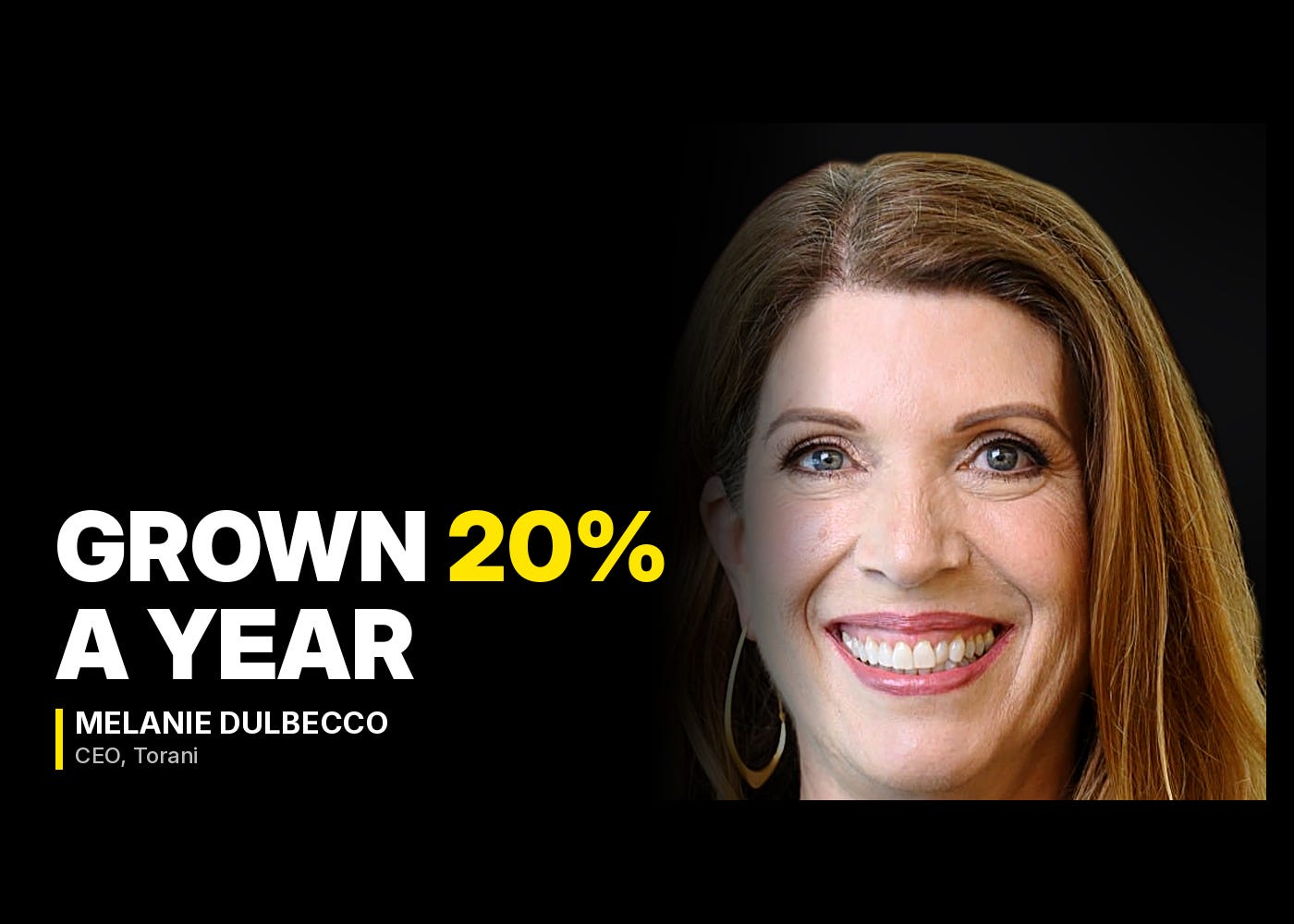
Photo via Chief Executive
Torani has grown revenue 20% a year on average for 35 straight years, funded entirely by its own cash flow and bank debt. Melanie Dulbecco, CEO of Torani, told Forbes' C-Suite Unscripted that the flavored-syrup maker is on track toward $1 billion in revenue, up from under $1 million when she joined as employee number nine.
"We've grown 20% a year on average for the past 35 years."
Melanie has run Torani for the past two decades after three decades at the company, taking it from a small San Francisco family business to a national brand without ever taking outside investment. Her case is that discipline, not luck, is why Torani has never laid off an employee in its 101-year history — through the Depression, the 2008-09 financial crisis and COVID.
The full interview is covered here so you can skip it. 37 minutes of audio, 4 minutes of reading.
Here are the 4 takeaways that matter.
Forbes: C-Suite Unscripted · Oct 29, 2026 · 37m · 33m saved
With Melanie Dulbecco, CEO of Torani
Key Takeaways
Torani has grown revenue 20% a year on average for 35 years, on track toward $1 billion, funded by its own cash flow and bank debt, not outside investors
Melanie treats 14-20% as the sustainable "sweet spot" — growth above 21% sustained becomes hyper-growth that "breaks people down"
Torani has never laid off an employee in its 101-year history, including through the Depression, 2008-09 and COVID
The executive team decided no layoffs was non-negotiable before running COVID's numbers, then built the financial plan around that constraint
Melanie treats AI as a tool to "automate and elevate" work, not eliminate jobs, drawing a direct parallel to the damage done by manufacturing automation
1. 20% Growth, Self-Funded
Melanie joined Torani as employee number nine, when revenue was under $1 million. The company is now "well over 800 million" in 2026 revenue, on track toward $1 billion, after averaging 20% annual growth for 35 years.
Torani funds its own growth through cash flow and bank debt, deliberately avoiding outside investment
"We think about how we fund our own growth through our own cash flow and with bank debt, rather than taking on outside investment." — Melanie Dulbecco
She said Torani treats 14-20% as the sustainable growth "sweet spot," while growth sustained above 21% becomes hyper-growth that damages the team over time.
"When you go past hyper-growth for a sustained period, you start to break people down." — Melanie Dulbecco
Her framing: financial performance is a trailing indicator of success, while the growth and development of the team is the leading one.
