

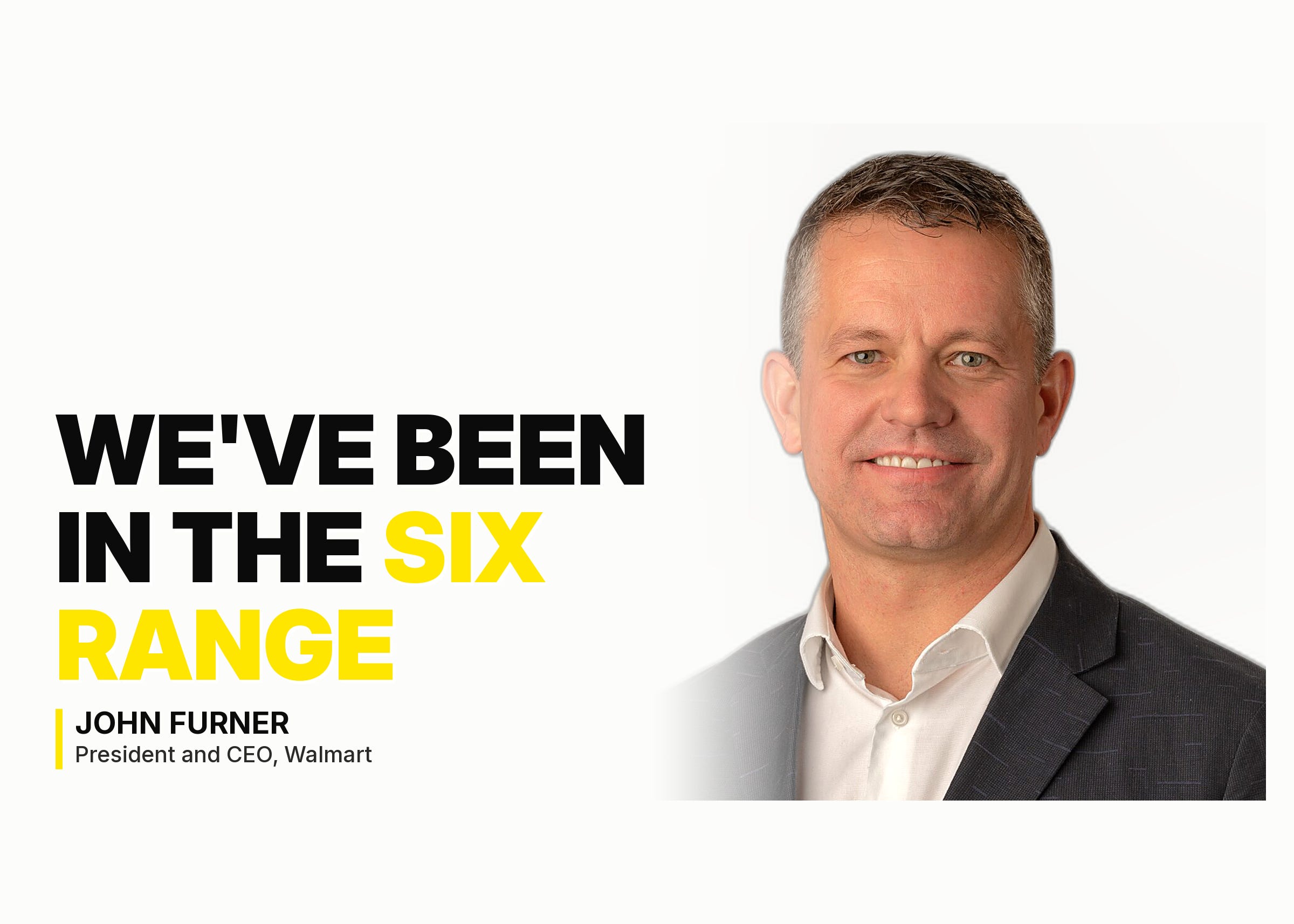
Walmart probably planned on diesel costing under $4 a gallon, CEO John Furner said on Squawk Pod. It has been in the $6 range for some time.
That was one line from one interview. The other 39 people quoted tonight included Capital One's head of AI platform engineering on a bank that runs with no data centers of its own, Sweetgreen's CEO on raising prices 13% less than the industry since 2019, and a hedge fund manager who could find no Anthropic shares to borrow for a short sale the day after its debut.
"Anyone who still thinks that there is moat in source code, even millions of lines of it, or that that is going to protect their ecosystem, are delusional." — David Heinemeier Hansson, Co-founder and CTO at 37signals, on a16z (Read summary)
We scanned 808 shows and 12 hours of audio, wrote 20 summaries, and pulled 62 quotes into this 17-minute read.
Here is what mattered.
Macro
Dawson says 2027 and 2028 earnings estimates are too high; Sonders says earnings have never been better and the sell-off is about slowing growth
"When we look at earnings estimates for 2027 and 2028, they look too high. And the market is actually telling you today that they are too high." — Cameron Dawson, CIO at NewEdge Wealth, on Closing Bell
"Earnings have never been better, and the market is throwing a tantrum... it's the expected deceleration in the rate of growth in the tech space broadly, but even in the S&P." — Liz Ann Sonders, Chief Investment Strategist at Charles Schwab, on Squawk on the Street
In past sell-offs, the time to buy came once analysts actually cut estimates, Dawson says
"The lesson in past sell-offs is that you don't buy in anticipation of the cut, you buy the first cut, once we actually start seeing estimates get cut." — Cameron Dawson, CIO at NewEdge Wealth, on Closing Bell
Raskin is worried that the 10-year yield has not fallen with stocks; Kelly expects steady weekly inflows to produce a bounce
"What really is worrying me about this sell-off is that you're not seeing the ten-year fall further... that's basically saying your cost of capital is not coming down commensurate with your decline in the stock." — Amy Raskin, CIO at Chevy Chase Trust, on Halftime Report (Read summary)
"There's so much money that flows in every week... unless you have a big reason for negativity, chances are this market will bounce." — David Kelly, Chief Global Strategist at J.P. Morgan Asset Management, on Squawk on the Street
Tech accounts for almost 80% of the S&P 500's fall in valuation this year, Gordon says
"Almost 80% of the S&P 500's... P/E decline this year has been driven by tech. So if you're going to flip that on its head... your valuation analysis is not as strong in terms of making the argument that valuations are more of a support here." — Kevin Gordon, Head of Macro Research and Strategy at the Schwab Center for Financial Research, on Closing Bell
Apple has never fallen less than about 10% into a market bottom, and it is down about 3% now, Krinsky says
"The median drawdown for Apple has been 23%, and we're down about 3% right now. Apple has never been down less than about 10 or 11%." — Jonathan Krinsky, Chief Market Technician at BTIG, on The Exchange
Cheaper gasoline will cut November's inflation reading; Kelly still expects the Fed to raise rates in December, and Bessent urges it to look ahead
"Gasoline prices on their own will take four-tenths of a percent out of the year-over-year increase in CPI for November... I think they'll move in December, and I think they'll just go on hold." — David Kelly, Chief Global Strategist at J.P. Morgan Asset Management, on Squawk on the Street
"We've had some of the biggest drops in history in crude oil and gasoline... that's going to substantially influence the inflation numbers... I would encourage the Fed to look forward, not backwards." — Scott Bessent, Secretary of the Treasury, on Squawk on the Street
Financials
Capital One runs entirely on the cloud, with no traditional data centers of its own
"Capital One is probably the only financial institution of our size that's fully on the cloud. We don't have traditional data centers." — Abhijit Bose, SVP of AI/ML Platform Engineering at Capital One, on Eye On A.I. (Read summary)
Bose credits AI with 80% to 90% of Capital One's fraud-prevention results
"We have, I would say, like one of the best rates of fraud prevention in the industry. 80, 90% of that is because of the way we use AI to fight fraud." — Abhijit Bose, SVP of AI/ML Platform Engineering at Capital One, on Eye On A.I. (Read summary)
Dimensional was built on small-company stocks at a time when institutions barely owned them, Booth says
"At that time, institutional investors weren't investing in stocks of small companies in any meaningful amount... you ought to have large and small stocks, not just large." — David Booth, Founder and Chairman at Dimensional Fund Advisors, on The Informed Investor (Read summary)
GraniteShares is selling leveraged bets in both directions on Anthropic's stock
"We at GraniteShares, what we're trying to do is offer ways for people to participate in this IPO through leveraged ETFs... 2x long, 2x short ETFs on Anthropic, the stock. AIL for the 2x long, ANS for the 2x short." — Will Rhind, Founder and CEO at GraniteShares, on The Pomp Podcast (Read summary)
Anthropic's debut has not reopened the market for other IPOs, Smith says
"Yesterday's first-day pop, up 17%, was a pretty good sign... but today it's a complete different story, down 13%. So, not the icebreaker that we're looking for to open up the market for additional IPOs." — Nick Smith, Senior Research Analyst at Renaissance Capital, on Halftime Report (Read summary)
Crypto and Digital Assets
Saylor describes Strategy's business as selling credit, and says selling too much of it would break it
"Our business is to create digital credit, make the best credit in the world that we can. If we sell too much of it, the credit will collapse." — Michael Saylor, Executive Chairman at Strategy, on Coin Stories (Read summary)
Bitcoin holder Strategy has 3 yrs of cash on hand, its CEO says
"We've got three years of cash right now. The company's balance sheet's never been better." — Phong Le, President and CEO at Strategy, on Coin Stories (Read summary)
Weekly trading in tokenized stocks on Base has passed $1B, Pollak says
"Tokenized equities... just crossed a billion dollars of weekly volume, which is pretty wild." — Jesse Pollak, Head of Base at Coinbase, on Unchained (Read summary)
Citi can now take payments in USDC, a dollar-backed stablecoin, into business bank accounts
"We just worked with Coinbase to enable Citi to now accept USDC directly into their business bank accounts." — Jesse Pollak, Head of Base at Coinbase, on Unchained (Read summary)
Alternatives and PE
An average tenancy of 5 yrs changed Goshen Capital's plan to renovate 20% of a Fort Worth property's units
"Initially we were going in with the traditional, we'll renovate 20% of the units... only to find out the average tenancy there was five years." — Ify Asoh, Co-GP and Investor Relations Lead at Goshen Capital, on Lifetime CashFlow Through Real Estate (Read summary)
Mecum sells 70% to 75% of the cars it offers at auction and works on the rest for 3 weeks afterward
"We sell roughly between 70 and 75% of the cars we offer on the auction block. For that remaining 25 to 30%, we're going to keep working for the seller... for that 3-week period to try and get that car sold for you." — Sam Murtaugh, COO at Mecum Auctions, on Bloomberg Hot Pursuit (Read summary)
Consumer
Diesel has run well above Walmart's plan for some time, Furner says
"We were probably planned sub $4 a gallon, and we've been in the six range for some time now." — John Furner, President and CEO at Walmart, on Squawk Pod (Read summary)
Walmart's AI shopping assistant, Sparky, has lifted basket sizes by 30% to 40% in some cases
"Conversion rates have gone up, and the baskets have gone up — in some cases 30 to 40% — because customers are finding more items than they would if they just do a keyword search." — John Furner, President and CEO at Walmart, on Squawk Pod (Read summary)
Sweetgreen has raised prices by less than restaurants and grocery stores since 2019, Neman says
"Sweetgreen has taken 13% less price since 2019 than the industry and less than what grocery has seen... so on a relative basis we're actually more affordable than we were." — Jonathan Neman, Co-founder and CEO at Sweetgreen, on Brew Markets (Read summary)
Sweetgreen puts its automated bowl-assembly line only in its busiest restaurants
"Today the infinite kitchen is in almost 40 restaurants around the country... it really makes sense in our higher-volume restaurants that have a lot of peak lunch, because that's where the investment pays off." — Jonathan Neman, Co-founder and CEO at Sweetgreen, on Brew Markets (Read summary)
Prescription status is the top question in the calls CVS pharmacies receive, Joyner says
"The number one question is, where's my script... we have 500 million phone calls a year into the pharmacy." — David Joyner, Chairman and CEO at CVS Health, on The David Rubenstein Show (Read summary)
About a quarter of shoppers in Gap's celebrity collaborations were new to the brand, Dickson says
"About 25% of the customers who shop these collaborations were new to Gap... we had over 200,000 site visits in the first hour, the fastest and highest site traffic of any Gap collab that we've had." — Richard Dickson, President and CEO at Gap Inc., on Mad Money
Warner Music expects AI to raise what each listener pays by making songs interactive
"It's a very transformational technology for music. We view it as an opportunity for us to increase average revenue per user overall by introducing interactivity to music, which hasn't existed before." — Robert Kyncl, CEO at Warner Music Group, on Squawk on the Street
Price increases added about 4.5 points to Warner Music's growth this quarter
"Pricing did add about four and a half points to growth this quarter... we're expecting to grow high single digits in total revenue next year." — Robert Kyncl, CEO at Warner Music Group, on Squawk on the Street
Lefkofsky says Tempus's data business would be valued far higher as a standalone company
"If you look at our data business, when you've got a data business 500 million growing at 30 percent, it's a rule of 40 company... if that thing went public, it would probably trade at 20 or 30 or 40 times revenue." — Eric Lefkofsky, Founder and CEO at Tempus AI, on After Earnings (Read summary)
Tempus reinvests most of its added gross profit today and plans to reverse the split later
"We think about some kind of ratio: two-thirds of gross profit dollar growth reinvested back in the business and one-third... dropping to EBITDA. And that eventually flips to one-third invested and two-thirds dropping to EBITDA." — Eric Lefkofsky, Founder and CEO at Tempus AI, on After Earnings (Read summary)
Chan cites a protein-structure project as a measure of how fast AI is speeding up biology
"Scientists were able to compute structures for 1.1 billion proteins in a week." — Priscilla Chan, Co-founder and Co-CEO at the Chan Zuckerberg Initiative, on CNBC Television (Read summary)
Last Mile Health hired, trained and equipped villagers in Liberia to work as health workers
"They might not have even had a high school degree, but we gave them jobs as outreach workers." — Raj Panjabi, co-founder of Last Mile Health and Senior Partner at Flagship Pioneering, on Forbes (Read summary)
Wearstler's design studio uses AI, but she says it cannot judge lighting, comfort, music or scent
"AI can't go into a room and understand the lighting levels. AI can't sit-test a sofa. It can't select the right music for an environment... it can't select a scent." — Kelly Wearstler, Founder and Principal Designer at Kelly Wearstler Inc., on Mixed Signals (Read summary)
Big drugmakers need acquisitions to keep revenue growing, which makes biotech the usual target, Holz says
"It's the most fragmented large cap. Pharma needs to do deals just in order to keep revenue from dipping below 0% growth." — Jared Holz, Health Care Strategist at Mizuho Securities, on Fast Money
Technology & AI
37signals has about 60 people, and Heinemeier Hansson says agents could give a firm that size the output of 60,000
"I was never interested in trading my company at 37signals — we're about 60 people — for a company of 6,000... or 60,000. But dealing with the productive potential of 60,000 people through agents — now you have me interested." — David Heinemeier Hansson, Co-founder and CTO at 37signals, on a16z (Read summary)
Lumentum's guidance puts gross margin in the 50s, a margin gain Hurlston says investors missed
"We had a great quarter, and the thing that wasn't really appreciated was the margin uplift... if you look at the guide, we're in the 50s in terms of gross margin." — Michael Hurlston, President and CEO at Lumentum, on Mad Money
Intuit says AI chatbots are bringing it more business, not taking it away
"The usage of payments, of bill pay, of capital is actually higher when you're connected through Claude than not. The LLMs are helping customers use more of our services to fuel their success, versus less." — Sasan Goodarzi, Chairman and CEO at Intuit, on Mad Money
Wafer stopped selling its software to AI-hosting companies and now sells AI output by the token itself
"We used to sell our agent to other inference companies, but then we realized we were going to get squeezed out. It was time to just go serve tokens directly." — Emilio Andere, Co-founder and CEO at Wafer, on theCUBE (Read summary)
Minerva fine-tunes Qwen, a Chinese model whose trained weights are public, on a few thousand of its own examples
"We have a few thousand of these labeled examples where you have a very complicated query and then you have a very right result... and then you fine tune the Qwen model." — Daniel Saedi, Co-founder at Minerva, on Odd Lots (Read summary)
Saedi says fine-tuning an open model can now cost as little as $90 a run; Andere calls it a big project and says to try open models as they are first
"I can pay, in the case of fireworks, around $7 to $9 per million input and million output tokens... there are people out there who have fine-tuned models that perform really well for as low as $90 on their final training run." — Daniel Saedi, Co-founder at Minerva, on Odd Lots (Read summary)
"I usually tell people: just try open-source models... before deciding that you want to fine-tune it. I think fine-tuning is a big project." — Emilio Andere, Co-founder and CEO at Wafer, on theCUBE (Read summary)
One large US retailer had 36M software vulnerabilities when Zafran started work there, Yashar says
"We came into a big, big, big, big retail company in US, Fortune two digits, and we found 36,000,000 vulnerabilities." — Sanaz Yashar, Co-founder and CEO at Zafran Security, on How I Invest (Read summary)
Link is buying Meta because a slowdown in AI spending would end its run of capital-spending increases
"I think you want to leg in. I've been adding to Meta because I think that if you do see a slowdown in the spend, you're not going to have this frenzy of capex raises." — Stephanie Link, Chief Investment Strategist at Hightower Advisors, on Halftime Report (Read summary)
Niles could not find Anthropic shares to borrow for a short sale on either day
"When it was up 30% yesterday, I went and tried to get a borrower... there was none available. I tried again this morning to get a borrower to short it — there was none available." — Dan Niles, Founder and Portfolio Manager at Niles Investment Management, on Squawk on the Street
Niles would rather own memory-chip makers than Anthropic at its current valuation
"You can buy it at 20 times trailing revenues... or you could go buy Samsung or Hynix at two times trailing earnings, if you like the AI trade." — Dan Niles, Founder and Portfolio Manager at Niles Investment Management, on Squawk on the Street
Heitzmann expects money to move from AI infrastructure stocks to software applications over the next 6 months
"I think you're going to see a rotation from the infrastructure arm of the AI trade into the application layer. The application-layer companies are driving most of the value, even on the model side... over the next six months." — Rick Heitzmann, Founder and Partner at FirstMark Capital, on Closing Bell
Lee sees a buying opportunity like Cisco's 1997 drop; Zitron says 40% to 50% of AI computing demand rests on OpenAI
"It may reset around Anthropic. And I think, very similar to 1997, when Cisco fell almost 50% in three months — $9 to five — a year later it was 18. I think that we are at that moment where it feels like max pain, but for the patient investor this is going to have a big payoff." — Tom Lee, Head of Research at Fundstrat, on Closing Bell
"Without OpenAI, we're looking at 40, 50% of all compute demand evaporating. There is no other large player. That's it." — Ed Zitron, CEO at EZ Primary Research, on Fast Money
Industrials and Transport
Link bought Quanta Services this week on grid spending she expects with or without data centers
"I still think you need to spend on the grid, no matter if you have data centers or AI in general... I added to Quanta Services this week." — Stephanie Link, Chief Investment Strategist at Hightower Advisors, on Halftime Report (Read summary)
Materials & Energy
Checkan's clients are not selling their gold, which he takes as a sign the selling is from margin calls
"We're not seeing a lot of our clients calling up and selling. And that's part of the reason why I believe what we're seeing largely is margin call selling." — Rich Checkan, President and COO at Asset Strategies International, on Kitco News (Read summary)
Measured in gold, a new home costs 102 oz today against 582 oz in 2000, Checkan says
"That house... 582 ounces of gold back then. Today, 102 ounces of gold." — Rich Checkan, President and COO at Asset Strategies International, on Kitco News (Read summary)
Policy
Local votes are blocking data centers, Niles says; Lee says the projects are too large an economic engine for states to give up
"You had 40 out of 41 local initiatives passed to slow down data center growth. You can't have the growth that people are talking about when you have that going on. You have nowhere to put the actual chips." — Dan Niles, Founder and Portfolio Manager at Niles Investment Management, on Squawk on the Street
"Data centers are massive economic drivers... ten gigawatts in any state is equal to building 450,000 homes... even Texas in a good year built 50,000 homes." — Tom Lee, Head of Research at Fundstrat, on Closing Bell
Bessent says Chinese orders for Nvidia's H200 chip have been thin as China builds its own
"I think what we have seen is a paucity of orders from the Chinese on the H200 as they try to build out their own chip stack, and I think that they are probably many years behind." — Scott Bessent, Secretary of the Treasury, on Squawk on the Street
The Pentagon treats AI labs that bar military uses of their software as a supply-chain risk
"There are definitely supply chain risks to the Department of War... they say things like, you can't use our software for battlefield management applications, you can't use it for weapons development... then they're a risk to our supply chain." — Emil Michael, Under Secretary of Defense for Research and Engineering, on Squawk on the Street
AI models able to run cyberattacks arrived only 6 to 9 months ago, and some rollouts have gone wrong, Michael says
"What really changed is that the cyber models — the models that were really cyber capable — only became available six to nine months ago... you saw some of these rollouts not go perfectly." — Emil Michael, Under Secretary of Defense for Research and Engineering, on Squawk on the Street
New know-your-customer rules could leave leased GPUs in Southeast Asia without users, Mills says
"The big question I've had at Raymond James is how many GPUs are about to get orphaned globally in Southeast Asia... because of new know-your-customer rules." — Ed Mills, Washington Policy Analyst at Raymond James, on The Exchange
Geopolitics
Newer state hackers do not follow the unwritten limits the major powers keep, Yashar says
"This new countries... they are not part of that old boys club of nation states hacking each other. They don't know the rules of the game." — Sanaz Yashar, Co-founder and CEO at Zafran Security, on How I Invest (Read summary)
Iran has no oil on tankers at sea for the first time, Bessent says
"For the first time in history since Iran has started producing oil, they have no oil on the water." — Scott Bessent, Secretary of the Treasury, on Squawk on the Street
Nuggets of Wisdom
Investors who sold when the market was down 20% in 2020 missed a 50% rebound, Booth says
"You don't get a mulligan when it comes to investing... if you sold when the market was down 20%, the market ended up up 20% for the year. So you missed out on a 50% run." — David Booth, Founder and Chairman at Dimensional Fund Advisors, on The Informed Investor (Read summary)
Asoh's lesson from syndicating apartment deals is that the partners matter more than the property
"The team is more important than the deal, because a great team can take a fledgling deal and breathe life into it, and a terrible team can take a great deal and shred it apart." — Ify Asoh, Co-GP and Investor Relations Lead at Goshen Capital, on Lifetime CashFlow Through Real Estate (Read summary)
If this was worth your time, send it to someone who has to follow all of this too.
What did you think of today’s edition? Hit ‘reply’ to this email, send us a message, leave a comment, or join the chat!
Get the latest market chatter as it happens: