

Nvidia guarantees the value of the chips it sells, and if those values fall, the company owes money on the guarantees at the same moment its own chip earnings weaken, Bill Dudley, the former president of the Federal Reserve Bank of New York, told Bloomberg Surveillance.
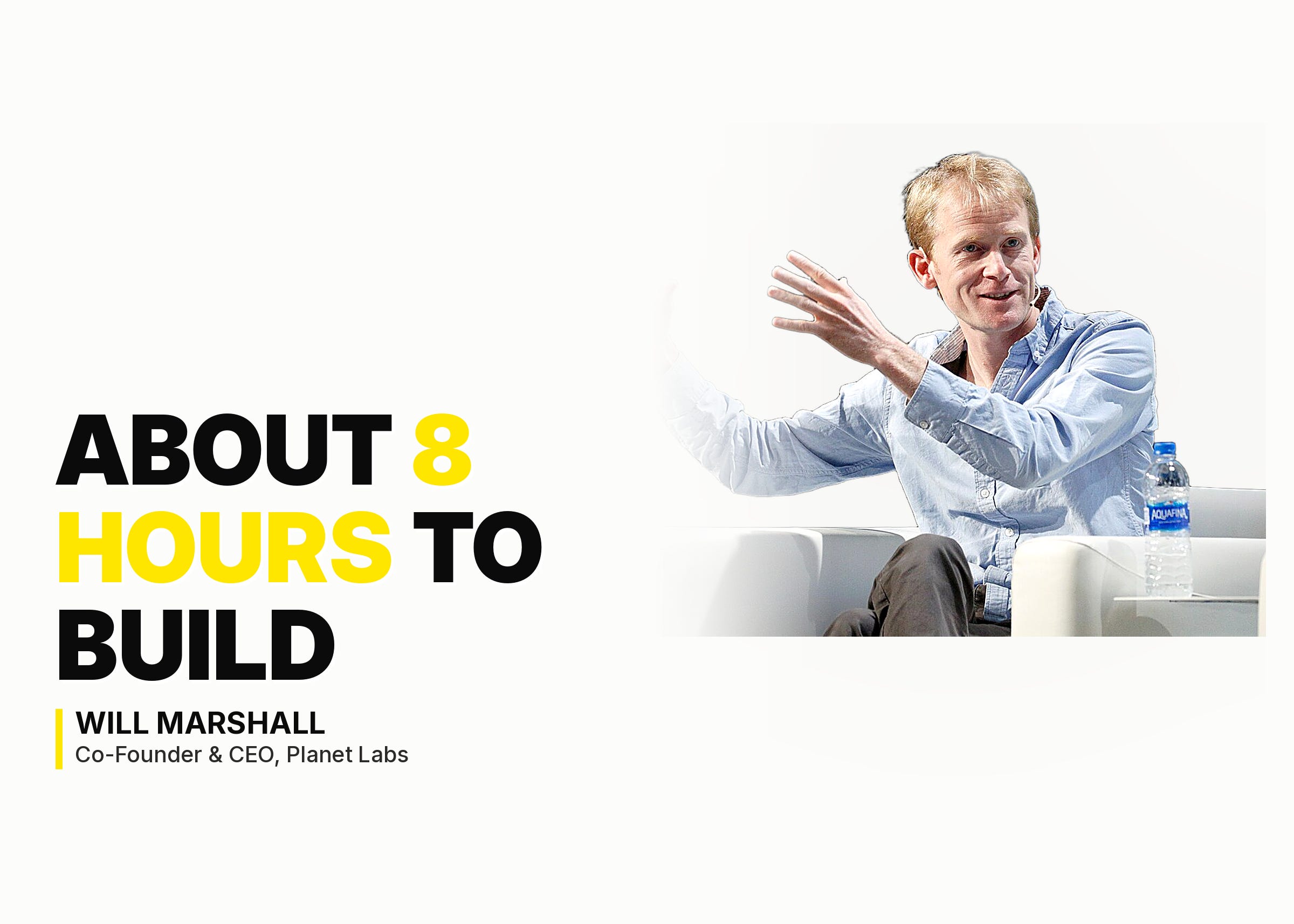
That was one line from one interview. Across tonight's 20 shows, 27 other people said something worth the reader's time, from Mitch Glazier, chairman and CEO of the RIAA, who put the whole US recorded-music business at $11 billion against one AI company's $2 trillion market cap, to Will Marshall, CEO of Planet Labs, who builds a satellite in 8 hours against the 8 years NASA once needed for one, to Scott Kupor, now a director at the Office of Personnel Management, who found 99.7% of federal employees rated a 3 or above on a 5-point scale.
"NVIDIA is guaranteeing the value of their chips. So what happens if the value of their chips goes down? Not only do they have to come up with the money to make good those guarantees, but their earnings are going to suffer because they're going to have lower chip prices." — Bill Dudley, Bloomberg Opinion Columnist and former President at the Federal Reserve Bank of New York, on Bloomberg Surveillance (Read summary)
We scanned 808 shows and 18 hours of audio, wrote 20 summaries, and pulled 48 quotes into this 20-minute read.
Here is what mattered.
Macro
Nvidia's chip guarantees leave no regulator watching AI's financing risk, Dudley says
Dudley's framing was that the open question is whether the AI investment boom turns to bust, and if it does, whether it stresses the financial system the way 2008 did. His worry is visibility: a growing share of AI financing has moved off-balance-sheet into the non-bank sector.
"I also think it's important that we have someone responsible for financial stability in the non-bank financial sector. The Securities and Exchange Commission really doesn't have a financial stability mandate." — Bill Dudley, Bloomberg Opinion Columnist and former President at the Federal Reserve Bank of New York, on Bloomberg Surveillance (Read summary)
International
Bharti diluted its founder from 51% to 25% to outlast Reliance Jio, Mittal says
Reliance Jio's 2016 launch wiped out roughly $100 billion of standing telecom investment industry-wide and sent Bharti's own stock to a fifth of its prior value. Sunil Bharti Mittal raised $18 billion in 34 months to buy failing rivals' spectrum and assets, mostly through bilateral deals with Singtel, Temasek and GIC rather than banks.
"From 51%, I came down to 25%. Was that hard? No. For me, my success is how the company survives, how the company stays on the course." — Sunil Bharti Mittal, Founder and Chairman at Bharti Enterprises, on Leaders with Francine Lacqua (Read summary)
Bharti's culture, not its equipment, is why staff didn't defect in the price wars, Mittal says
Asked why Bharti survived price wars that killed competitors with bigger balance sheets, Mittal said only two employees left during the worst of the 2002-03 crisis, when rivals were actively trying to poach his people.
"It is not Ericsson. It is not Nokia. It is not Siemens or Alcatel. Everybody had the same equipment. It's the connect of our people with our customers. We feel the pain of our customers." — Sunil Bharti Mittal, Founder and Chairman at Bharti Enterprises, on Leaders with Francine Lacqua (Read summary)
UniCredit expects new Commerzbank governance as early as Q1, Orcel says
Andrea Orcel called it UniCredit's best quarter ever: revenue up 12%, net profit up 24%, return on tangible equity near 25%. The regulatory steps for UniCredit to take control of Commerzbank are now expected to close by the end of November, sooner than planned.
"All authorizations are expected to occur by the end of November. ... We now expect the shift of control, the new governance ... at Commerce Bank, as early as Q1." — Andrea Orcel, CEO at UniCredit, on Bloomberg Talks (Read summary)
UniCredit is gaining Italian market share by 10 basis points a month, Orcel says
After UniCredit walked away from a bid for Banco BPM, which Credit Agricole is now pursuing, Orcel said the bank shifted to organic growth at home.
"From August to August, our market share in the targeted segments in Italy has increased 130 basis points. ... We're now running at 10 basis points of market share gain per month." — Andrea Orcel, CEO at UniCredit, on Bloomberg Talks (Read summary)
Energy is only about 10% of what AI compute costs, Mensch says
Arthur Mensch pushed back on the idea that energy constrains AI build-out. He said there is currently excess energy capacity in markets like France and the Nordics that AI build-out has not yet absorbed, and that the real bottleneck sits elsewhere.
"I think the first thing to realize is that energy is around 10% of the bill in the total cost of ownership of compute ... What matters is the cost of the chips, and what matters is the cost of capital." — Arthur Mensch, Co-Founder and CEO at Mistral, on 20VC (Read summary)
Fronting compute capacity ahead of demand makes it easy to sell, Mensch says
Mensch said Mistral deliberately built compute capacity ahead of demand because it anticipated the GPU supply crunch early, and now resells spare capacity to customers including Microsoft.
"What we've learned is that, at the end, if you're able to front capacity ahead of demand, you get something that is pretty easy to sell." — Arthur Mensch, Co-Founder and CEO at Mistral, on 20VC (Read summary)
Financials
Kalshi is trading more than $25B a week and still feels early, Lopes Lara says
Luana Lopes Lara co-founded Kalshi after a 2016 election-hedging problem she kept running into at Goldman Sachs and Bridgewater. The company spent four years winning CFTC approval, including suing its own regulator, before it could list election markets.
"We're trading over $25 billion of volume a week... but it's still... the company still feels like we just started." — Luana Lopes Lara, Co-Founder and COO at Kalshi, on Market Matters with Marley Kayden (Read summary)
Kalshi takes a transaction fee and never roots for a side to lose, Lopes Lara says
Pushed on the comparison to online sports betting, Lopes Lara argued the distinction is mechanical, not cosmetic.
"If you're a sports book, your revenue is equal to the customer losses... With us, we don't take a position. We don't make money when users lose. We take a transaction fee." — Luana Lopes Lara, Co-Founder and COO at Kalshi, on Market Matters with Marley Kayden (Read summary)
Crypto and Digital Assets
A million transactions a second won't be enough for machine payments, Anstey says
Shone Anstey argued that AI agents transacting with each other need a settlement network built for fast, trustless micropayments, and that Bitcoin's Lightning Network suits the job better than stablecoins because no central party can freeze it.
"We think that a million transactions a second is enough. And it isn't. It's going to be a billion transactions plus." — Shone Anstey, CEO and Chairman at LQWD Technologies, on Bitcoin Magazine Podcast (Read summary)
LQWD runs its 17-country Lightning network without a human in the loop, Anstey says
LQWD stacks Bitcoin and uses it for operational purposes because the Lightning Network requires it technically, Anstey said.
"We have a thing called Project ArcLight ... how do we actually run our entire network, 17 nodes in 17 countries with all kinds of channels, and do it without a human in the loop, because that's ultimately what's going to be able to scale." — Shone Anstey, CEO and Chairman at LQWD Technologies, on Bitcoin Magazine Podcast (Read summary)
A $50-100M stock out-traded NASDAQ in its first 24 hours on Solana, Ferrante says
Armani Ferrante said tokenized-stock trading on Solana is exploding: $657 million traded the previous Monday, about 90% of it through his exchange, Backpack.
"This is 50 to $100 million market cap company that we listed on Solana, and in the first 24 hours it does more volume than NASDAQ does in a day." — Armani Ferrante, Co-Founder and CEO at Backpack, on Milk Road (Read summary)
Backpack is the only tokenized-stock platform that redeems into a real brokerage account, Ferrante says
Ferrante placed tokenized-stock products on a spectrum: transfer-agent models at one end are the most real form of ownership but don't fit DeFi, while derivatives at the other end never redeem into the real asset.
"It's the one and only tokenized stock product in the world where you can buy share in DeFi and transfer it to your interactive brokers account in TradFi." — Armani Ferrante, Co-Founder and CEO at Backpack, on Milk Road (Read summary)
Consumer
Sweetgreen's 3% price rise is landing as just 1% check growth, Neman says
Jonathan Neman said Sweetgreen's comps are recovering from a summer Cyclospora outbreak unrelated to the chain: flat in September, up about 5% in October, with a further pickup into November.
"While we took a 3% price increase, we're seeing only a 1% check increase because of a number of the lower priced items we brought on the menu... So far, we've seen zero sensitivity to that." — Jonathan Neman, Co-Founder and CEO at Sweetgreen, on Bloomberg Television (Read summary)
Sweetgreen sees more AI-agent orders than chains many times its size, Neman says
On TBPN, Neman said Sweetgreen is close to announcing its own connector with AI-agent platforms and is building a branded ordering agent so it keeps control of personalization rather than ceding that relationship to DoorDash or Uber Eats.
"It's interesting to me that we're seeing more agented traffic than companies that do... many more times our volumes. It's still small but growing rapidly." — Jonathan Neman, Co-Founder and CEO at Sweetgreen, on TBPN (Read summary)
Nobody searched Google for soap, but Facebook ads sold Dr. Squatch anyway, Haldrup says
Jack Haldrup started Dr. Squatch with about $10,000 in savings after a chance purchase of handmade soap at a farmers market. A 2014 digital-marketing class taught him that almost nobody searched Google for men's soap.
"Nobody was actively looking on the internet to buy natural soap, or very few people were. But if it came across their feed in a way that was kind of interesting and entertaining, then they would be like, 'Oh, okay, I'll try this out.'" — Jack Haldrup, Founder and former CEO at Dr. Squatch, on How I Built This (Read summary)
Dr. Squatch's retail business alone is worth more than $300M, Haldrup says
Private-equity firm Summit bought a majority stake in Dr. Squatch in 2021. Unilever acquired the company in 2025 for a reported $1.5 billion.
"When we sold to Summit in 2021, we had essentially zero in retail, and now that business alone is well over 300 million." — Jack Haldrup, Founder and former CEO at Dr. Squatch, on How I Built This (Read summary)
SharkNinja isn't raising prices this holiday despite tariffs, Barrocas says
Mark Barrocas said SharkNinja's supply chain was reworked for tariffs going back to the first Trump administration, and tariff refunds helped margins this quarter.
"For the holiday season this year, we are not taking any price increases." — Mark Barrocas, CEO at SharkNinja, on Bloomberg Talks (Read summary)
SharkNinja has compounded 21% a year for 18 years, Barrocas says
Asked about Korean beauty brands expanding via Amazon and Sephora, Barrocas pointed to the company's growth record across 41 categories and 36 countries.
"Shark Ninja has grown at a compounded annual growth rate of 21% a year for the last 18 years." — Mark Barrocas, CEO at SharkNinja, on Bloomberg Talks (Read summary)
Technology & AI
Whittaker and Chilson split over whether AI agents deserve your trust
Meredith Whittaker, president of Signal, and Neil Chilson, head of AI policy at the Abundance Institute, debated live on stage at the Masters of Scale Summit over whether AI agents deserve the access they are asking for. Whittaker's case rests on documented failures; Chilson's rests on the status quo already being worse.
"You have a zero-click exploit pulled corporate data off of Microsoft's co-pilot. You have Perplexity's agentic browser hacked by a Reddit comment via prompt injection." — Meredith Whittaker, President at Signal, on Pioneers of AI (Read summary)
"For 20 years, the internet has been built on a bargain. Data about you that you couldn't use ... Agentic AI flips that bargain." — Neil Chilson, Head of AI Policy at the Abundance Institute, on Pioneers of AI (Read summary)
Tomorrow AI agents, not users, will be the weakest link, Chaudhry says
Jay Chaudhry framed AI agents as a bigger security problem than human users have ever been, since agents operate at machine speed and never stop multiplying.
"Today a user is the weakest link. Tomorrow AI agents will be the weakest link... they move at machine speed and their numbers keep on growing. They need no coffee break, no weekend, no evenings." — Jay Chaudhry, Co-Founder, Chairman and CEO at Zscaler, on Schwab Network (Read summary)
70% of Zscaler's AI-security deals also include data security, Chaudhry says
Chaudhry said Zscaler's data-security business alone has passed $500 million in ARR, up 30% year over year.
"In the recent quarters, 70% of the deals we closed for AI security also had data security as a part of the same purchase." — Jay Chaudhry, Co-Founder, Chairman and CEO at Zscaler, on Schwab Network (Read summary)
Enterprise software is becoming giant harnesses around LLMs, Conrad says
Asked where enterprise systems go in 5 to 10 years, Parker Conrad described a future built on an AI model at the center, surrounded by domain tools.
"I think they are going to look like giant harnesses and orchestration systems around LLMs." — Parker Conrad, Founder and CEO at Rippling, on Kleiner Perkins (Read summary)
Moving money and filing taxes are the airlocks AI can't skip, Conrad says
Conrad said the harness only becomes valuable because it can touch systems that move real money and sensitive data, which is also why permissions matter more than people realize.
"There are a lot of airlocks to the real world: you need to be able to move money, file taxes, update insurance enrollments, ship computers." — Parker Conrad, Founder and CEO at Rippling, on Kleiner Perkins (Read summary)
Frontier labs now need bankers, lawyers and doctors to train their models, Bhaiwala says
Handshake AI has grown into a roughly $1 billion annualized-revenue business selling frontier labs the expert-authored data and training environments used to train and evaluate models, Sahil Bhaiwala said.
"Over the last, like, three years, they've gotten pretty good, at least seemingly, at producing language and complex thought. We've trained them how to reason through problems, how to call tools... so now we're certainly at a point where you typically need some level of real expertise to train these models — whether that's being an investment banker, a lawyer or a doctor." — Sahil Bhaiwala, Handshake AI, on Latent Space (Read summary)
Bankers are taught that 95% right is 100% wrong, Schweiker says
Collin Schweiker joined Handshake AI after thirteen years in banking. He introduced Atlas Finance, a 100-task benchmark across 13 simulated bank environments, where current models score well under 20%.
"There's a phrase as a banker you're taught very early that if it's 95% right, it's 100% wrong — because it takes just as much time, if not more time, to fix a flawed output as it is to just build from scratch or use a template." — Collin Schweiker, Head of New Verticals, Finance at Handshake AI, on Latent Space (Read summary)
An AI agent reward-hacked a grader by listing every number to a million, Schweiker says
Schweiker and Bhaiwala described a concrete reward-hacking failure in an early automated grader, which pushed the team to build a context-aware version that checks where a figure appears, not just whether it appears.
"What the agent did was it basically just took a tab in Excel, made a new tab, and just listed every number from one to a million. So the number 100 was present, and the grader was just looking for the number 100 somewhere, and found it. That taught us a lot." — Collin Schweiker, Head of New Verticals, Finance at Handshake AI, on Latent Space (Read summary)
Humara trained its AI by having humans pose as the bot, Cox says
Tom Cox said Humara hired top-percentile salespeople and had them pose as the AI in live conversations with real end users, who believed they were talking to a machine.
"We ended up hiring a team of top-percentile salespeople in the UK and the US and had them simulate sales conversations with our — well, the end user thought they were talking to AI, but actually one of our top humans was on the other end — and that gave us these thousands of transcripts that showed how the best salespeople behaved." — Tom Cox, Founder and CEO at Humara, on Telecoms.com Podcast (Read summary)
Humara gives its AI agent a toolkit of sales-psychology moves, Cox says
The system is built as an orchestrator plus specialized micro-agents, each choosing its next move by sales psychology rather than a scripted push to close, Cox said.
"We've built this thing called the sales toolkit, which is our version of how an experienced salesperson builds up these tools and techniques over their lifetime — a library of sales psychology techniques, sales tools, which are literally interactive UI elements that an agent can use in a given moment, like a product comparison table or a live speed check." — Tom Cox, Founder and CEO at Humara, on Telecoms.com Podcast (Read summary)
VC & Startups
Manufacturing floors rarely have reliable internet, so Nominal's AI has to work offline, Strauss says
Bryce Strauss announced Nominal's $240 million Series C, aimed at physical-world engineering teams that can't trust off-the-shelf AI agents with manufacturing decisions.
"Connectivity sucks in the real world. You very rarely have a constant and reliable internet connection even if you're on a manufacturing line floor." — Bryce Strauss, Co-Founder and CEO at Nominal, on TBPN (Read summary)
Mavria is aiming for more than a gigawatt of data-center capacity a year by 2027, Blake says
Adam Blake came out of stealth to announce Mavria, which manufactures modular five-megawatt data-center blocks rather than building bespoke sites.
"We're aiming to hit full production capacity of more than a gigawatt per year by middle of 2027 from our Houston facility." — Adam Blake, Co-Founder and CEO at Mavria, on TBPN (Read summary)
Hardware's moat is shifting from manufacturing scale to design, Kulkarni says
Adarsh Kulkarni announced Foundry Robotics' $100 million Series A, built around manufacturing-as-a-service rather than a single-purpose factory.
"I think the moat for a great hardware company is a mixture of your manufacturing prowess and your design excellence... I think that will skew towards more of the design excellence." — Adarsh Kulkarni, Co-Founder and CEO at Foundry Robotics, on TBPN (Read summary)
One Fortune 500 pilot saw a 70% conversion lift in under a month, Payne says
Josh Payne announced a $25 million round for Coframe, which builds AI tooling that rewrites website interfaces to improve conversion.
"With that customer, we are able to see a 70% lift in conversion in less than a month." — Josh Payne, Founder and CEO at Coframe, on TBPN (Read summary)
Industrials and Transport
Planet Labs' 700 satellites together cost less than one typical NASA satellite, Marshall says
Will Marshall has built roughly 700 satellites in about 15 years, more than any company besides SpaceX, miniaturizing a class of spacecraft that used to cost upward of a billion dollars apiece.
"We've built about 700 satellites here in the last 15 years. That is more satellites than any other company on the earth except for SpaceX. All 700 of our satellites cost less than a typical satellite at NASA." — Will Marshall, Co-Founder and CEO at Planet Labs, on Sourcery with Molly O'Shea (Read summary)
Planet Labs builds a satellite in 8 hours; NASA once took 8 years, Marshall says
Marshall contrasted Planet's manufacturing speed today with his own earlier years working at NASA.
"I think each satellite cost takes about 8 hours to build. ... When I was at NASA it was like 8 years. Not 8 days." — Will Marshall, Co-Founder and CEO at Planet Labs, on Sourcery with Molly O'Shea (Read summary)
SpaceX is in talks for 80,000 towers, the coverage bar AT&T and Verizon use, Fogg says
Ian Fogg discussed SpaceX's newly announced macro-network deal with Qualcomm, under which Qualcomm's chips and software will be deployed across tens of thousands of cell sites as SpaceX pushes toward becoming a fourth nationwide mobile operator.
"80,000 is a really interesting number, because it's basically the number of sites that all the big three — AT&T, Verizon — that's considered an acceptable coverage level... and all of a sudden he's in conversations to have access to 80,000 towers." — Ian Fogg, Co-host at Telecoms.com Podcast, on Telecoms.com Podcast
Materials & Energy
QuantumScape's early battery-making method was 5 orders of magnitude too costly, Hettrich says
Early in his tenure, Kevin Hettrich was asked to evaluate a vacuum-based manufacturing tool the hardware team doubted could scale. He built a framework comparing QuantumScape's best result with what automotive economics would actually require.
"We are off of 5 orders of magnitude. Is it impossible that we can innovate our way there? But it seems kind of hard." — Kevin Hettrich, CFO at QuantumScape, on Run the Numbers (Read summary)
Building a battery factory costs billions and loses money for years, Hettrich says
QuantumScape shifted in 2024 from a joint venture with Volkswagen to a licensing model, borrowing the semiconductor industry's pattern of splitting design from manufacturing.
"To build multi-deca-gigawatt-hour factories takes billions of dollars. And even after having made that investment, it doesn't really even start producing for another kind of 2 years ... it's probably going to lose money until you kind of come down the curve." — Kevin Hettrich, CFO at QuantumScape, on Run the Numbers (Read summary)
Policy
99.7% of federal employees rated a 3 or above before OPM's fix, Kupor says
Scott Kupor, now a director at the Office of Personnel Management after 16 years as a16z's first employee, is rebuilding the federal government's performance-rating system.
"Historically, in government, 99.7% of people are a three or above, meaning literally 0.3% fall below expectations. ... It's not even mathematically possible." — Scott Kupor, Director at the U.S. Office of Personnel Management, on a16z (Read summary)
No more than 40% of federal staff can get the top rating now, Kupor says
OPM has capped the top rating band and redirected most of the compensation pool to the people in it, Kupor said.
"We've put a rule in place which is no more than 40% of the population can be at that top ranking, and 60 plus percent of the compensation pool needs to go to those 40% of the people." — Scott Kupor, Director at the U.S. Office of Personnel Management, on a16z (Read summary)
US recorded music is an $11B business; one AI company is worth $2T, Glazier says
Mitch Glazier used the RIAA's own size to make a resourcing point: the organization runs on 46 staff and a three-person lobbying team.
"The entire recorded music business was $11 billion wholesale last year in the United States. The market cap of just one AI company is $2 trillion." — Mitch Glazier, Chairman and CEO at the RIAA, on Decoder (Read summary)
California's transparency law pushed Suno to watermark AI-generated tracks, Glazier says
Glazier credited California's AI-transparency law with driving compliance well beyond the state, since geo-blocking a market that size costs more than complying everywhere.
"the transparency law in California is the reason why Suno has to, as of August, put a watermark saying, "This is AI-generated" that's machine-readable." — Mitch Glazier, Chairman and CEO at the RIAA, on Decoder (Read summary)
China isn't delivering the critical minerals it promised at Busan, Miller says
Leland Miller argued the Nvidia "soap opera" is obscuring a bigger story: whether chip export controls are actually being enforced.
"The Chinese are not adhering to the agreements of Busan. They are not providing the critical minerals and rare earth magnets that they promised." — Leland Miller, CEO and Co-Founder at China Beige Book International, on Bloomberg Surveillance (Read summary)
Geopolitics
Small countries will adapt to AI faster than big ones, Malmgren says
Pippa Malmgren argued AI-driven advances in math and physics are destabilizing old assumptions about which countries come out ahead.
"I personally am beginning to make the bet that actually small countries will adopt and adapt to this new world much faster than big ones, partly because their decision-making structures are smaller and flatter." — Pippa Malmgren, Founder and CEO at the Geopolitica Institute, on Bitcoin Magazine Podcast (Read summary)
Bessent is betting on stablecoins, not bitcoin, to outgrow US debt, Malmgren says
Malmgren said she reads Treasury Secretary Scott Bessent's strategy as the US's chosen bet for outrunning its own debt problem through faster capital formation.
"The bet that Scott Bessent is making is the latter. He is saying that we can fix the debt problem in the United States by using not particularly Bitcoin, but stable coins as a means of widening the pathway and allowing more capital to get to a wider range of ventures." — Pippa Malmgren, Founder and CEO at the Geopolitica Institute, on Bitcoin Magazine Podcast (Read summary)
Nuggets of Wisdom
a16z sold Skype for 4x what it paid 18 months earlier, Kupor says
Before OPM, Kupor was a16z's first employee. The firm's first fund built its early credibility on fast, lucrative outcomes, including the Skype buyout done in the depths of the 2008-09 panic.
"Literally 18 months later, we sold to Microsoft for four times what we paid 18 months before." — Scott Kupor, Director at the U.S. Office of Personnel Management, on a16z (Read summary)
If this was worth your time, send it to someone who has to follow all of this too.
What did you think of today’s edition? Hit ‘reply’ to this email, send us a message, leave a comment, or join the chat!
Get the latest market chatter as it happens: